

Everyone says software is an AI loser.
You should own hardware instead.
Right?
This is the consensus view. In fact our FoF friend says the software short position across her hedge fund holdings is so pervasive it could be a systemic risk. She’s worried she needs to go long as a hedge. Just in case (HF Manager Notes).
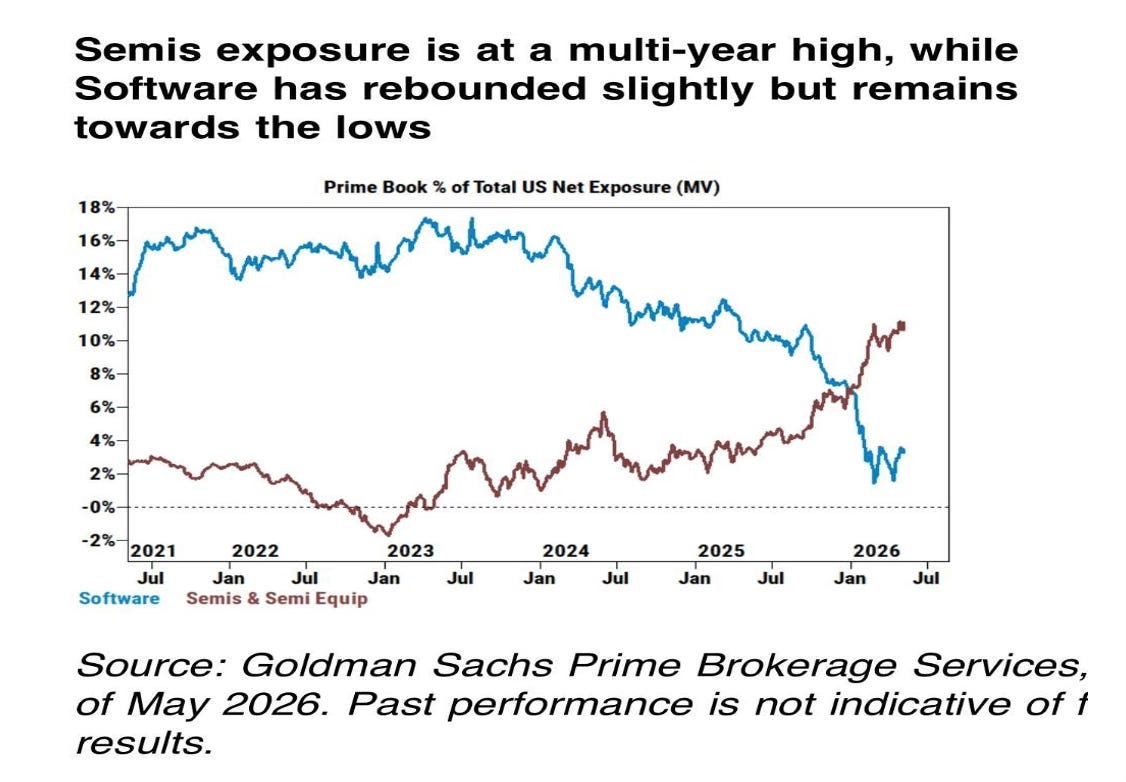
The first reaction is not always right.
We have a disruptive technology on our hands, and in our podcast research, ETF theme trading era, everyone wants a clever, insightful answer, and they want it now.
The market’s initial reaction to the rise of vibe coding and the concept of agentic workflows which didn’t need a software interface was that software as a service would get disrupted. Anyone would be able to make their own custom software and agents wouldn’t need software subscriptions. Or, if AI did need a subscription it would cost a lot less than human subscriptions. The existing software model would be disrupted.
From this line of thought the conclusion ‘Software is an AI loser’ quickly became a theme. The IGV ETF got immediately smashed. Nobody wanted to be the last to realise their software stock was actually a newspaper company. They sold first and asked questions later.
Now that the selling rush is over, and everyone is short, the market has time to work out the nuances of how software will be incorporated into AI workflows, and whether it’s a benefit or a negative. The picture is nuanced and I don’t think it’s all bad. In fact it mostly likely positive.
Here are 10 bull points to consider about software.
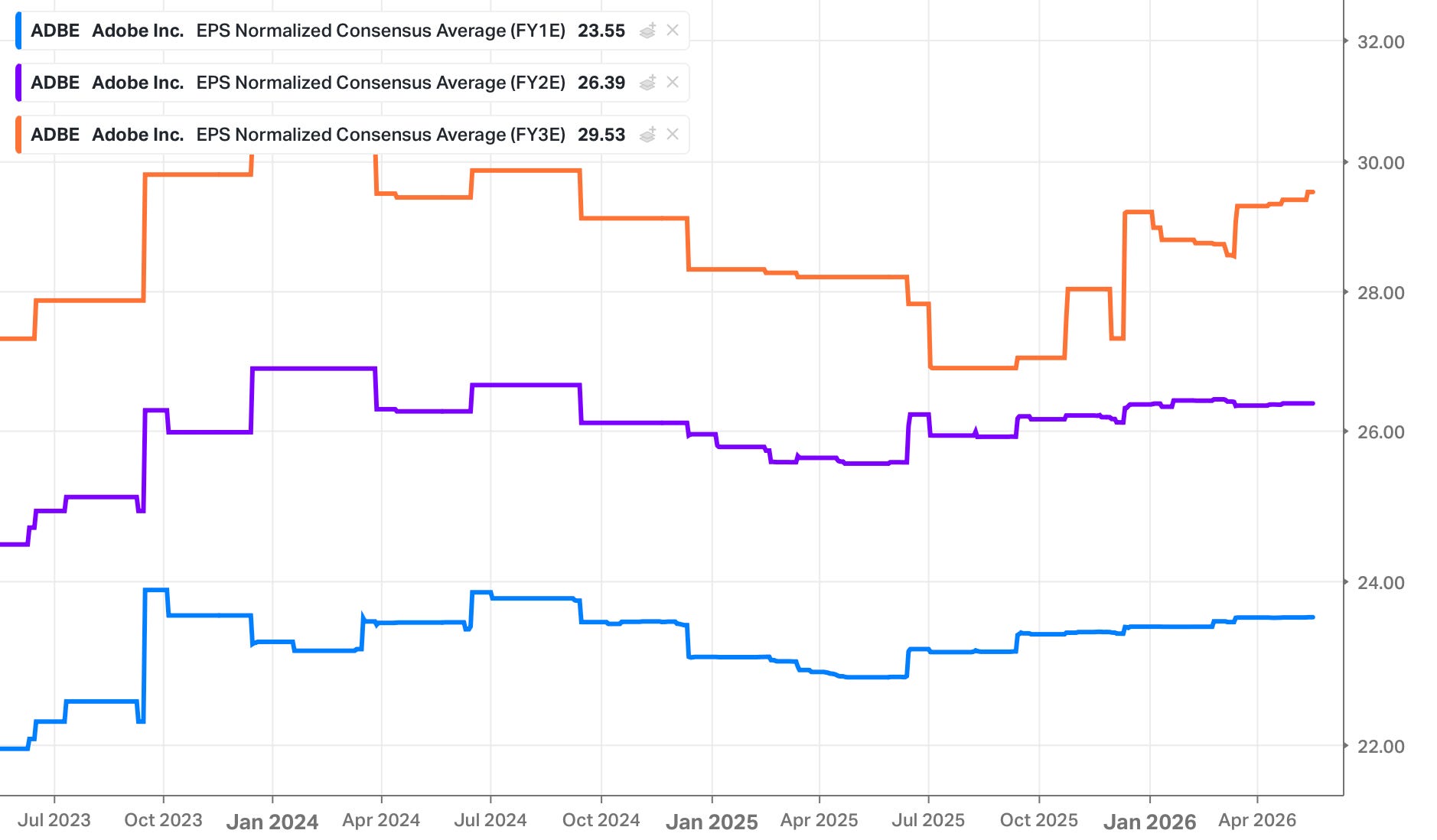
#1 Estimate revisions are positive. Despite the rapid adoption of AI (the fastest adoption of anything ever according to AMD) earnings estimates for most software companies are going up. This is the biggest warning sign that shorting software companies is going to be a mistake.
Let’s focus on some hated companies, like Adobe. Everyone knows AI can make images without help from Adobe, and we will also create our own video editing software. Yet, the earnings outlook for Adobe is remarkably stable, and growthy (13% CAGR).
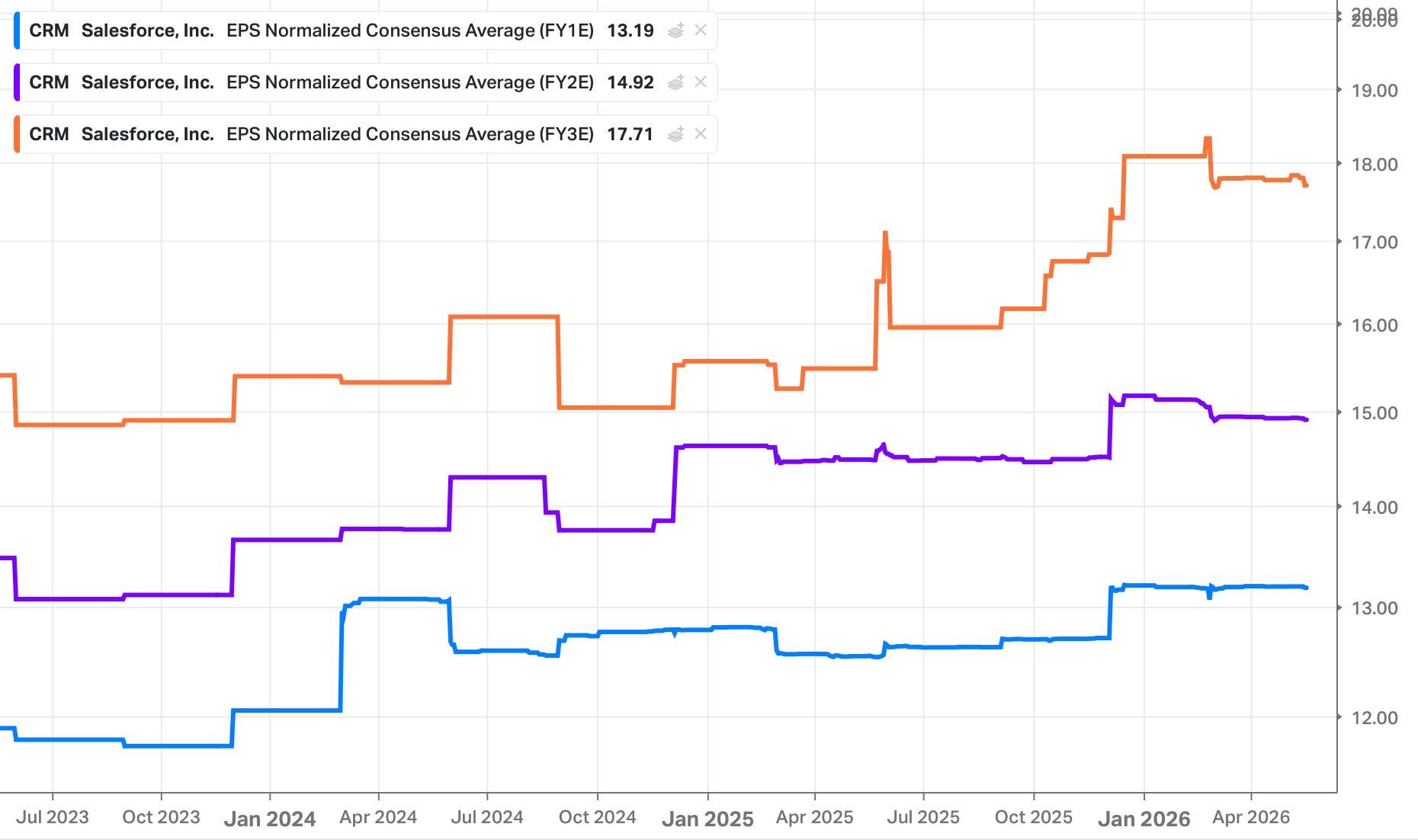
Same with Salesforce. We all know we will create our own CRM’s in the future with AI and yet, somehow analysts are raising earnings estimates for Salesforce, especially 2029 estimates (when Salesforce should be the most dead). Analysts forecast 17% earnings growth.
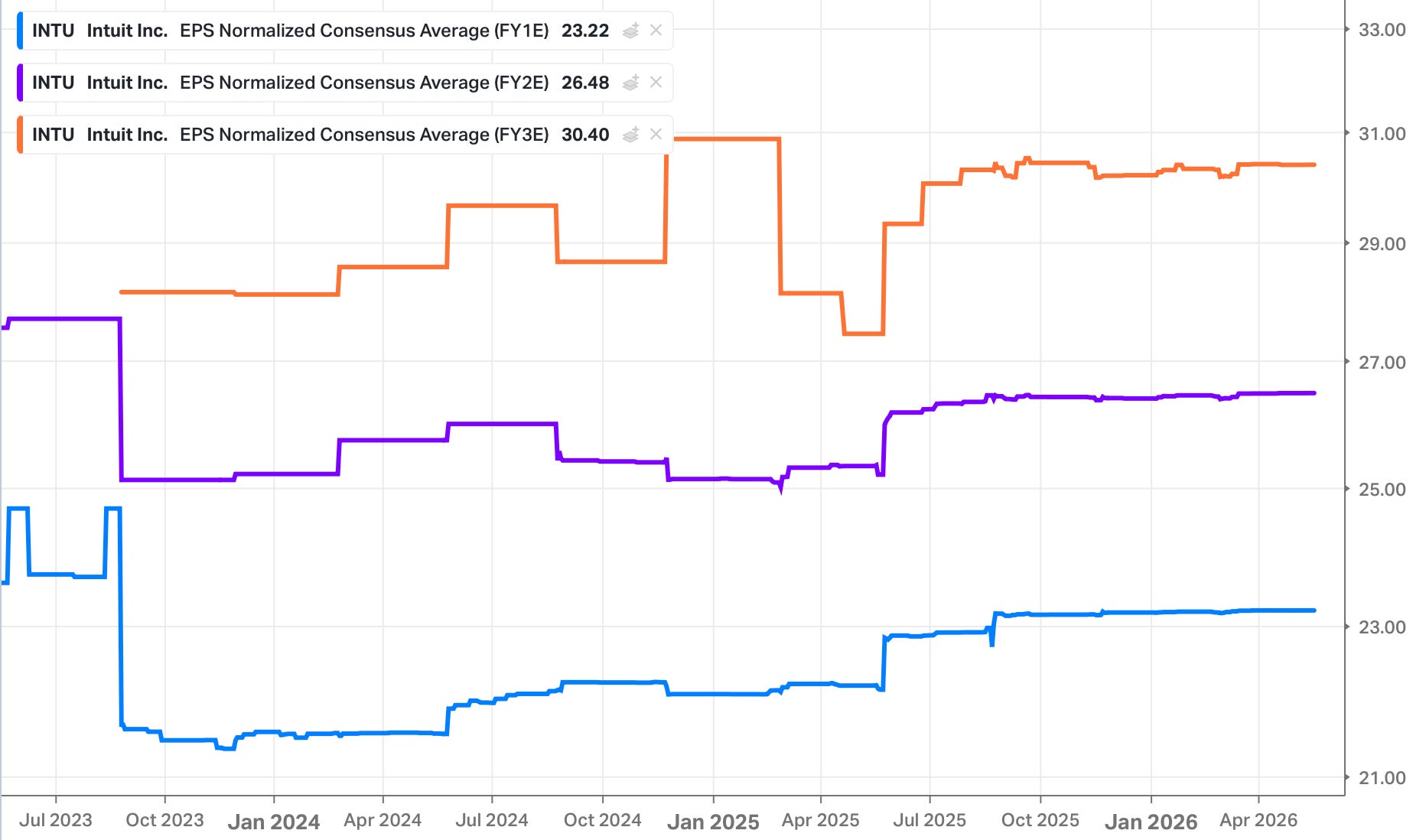
Same thing with tax software (Intuit). Surely that should be dead by 2029 too. And yet earnings estimates are stable/rising and imply 16% annual growth.
#2 All software is not Bloomberg: Part of the reason finance professionals are so negative on software is the software they use everyday (Bloomberg and Factset) is the most challenged. Analysts use Bloomberg. It’s what they know. They don’t use Salesforce or Autodesk. Bloomberg and Factset are super expensive seat licenses which repackage public information. That’s going to be a hard business model to repurpose for AI workflows and come out revenue neutral. But all software is not Bloomberg.
#3 Software usage is going to explode. AI and Software are complimentary goods. Software is deterministic while AI is probabilistic. When you run software, (unless randomness is specifically inserted) you get the same outcome every time. That’s valuable and usually what you want. When you prompt AI you don’t get the same outcome every time. Each has its strengths. Many steps of an AI workflow need to be deterministic and use software. As AI workflows increase, so will the use of software. We will have an explosion in the AI use of software.
#4 Just because you can, doesn’t mean you will: Vibe coding is amazing. But just because I can prompt an AI to build my own version of Salesforce, it doesn’t mean I want to, or will. The same way just because I have a kitchen and can cook my own food, doesn’t mean I no longer go to restaurants.
Vibe coding a one-off software prototype also gives no consideration to the incredible amount of maintenance work and debugging when a large number of 3rd party users use software. It’s a never ending task. Running a large software company is not the same as creating a piece of software.
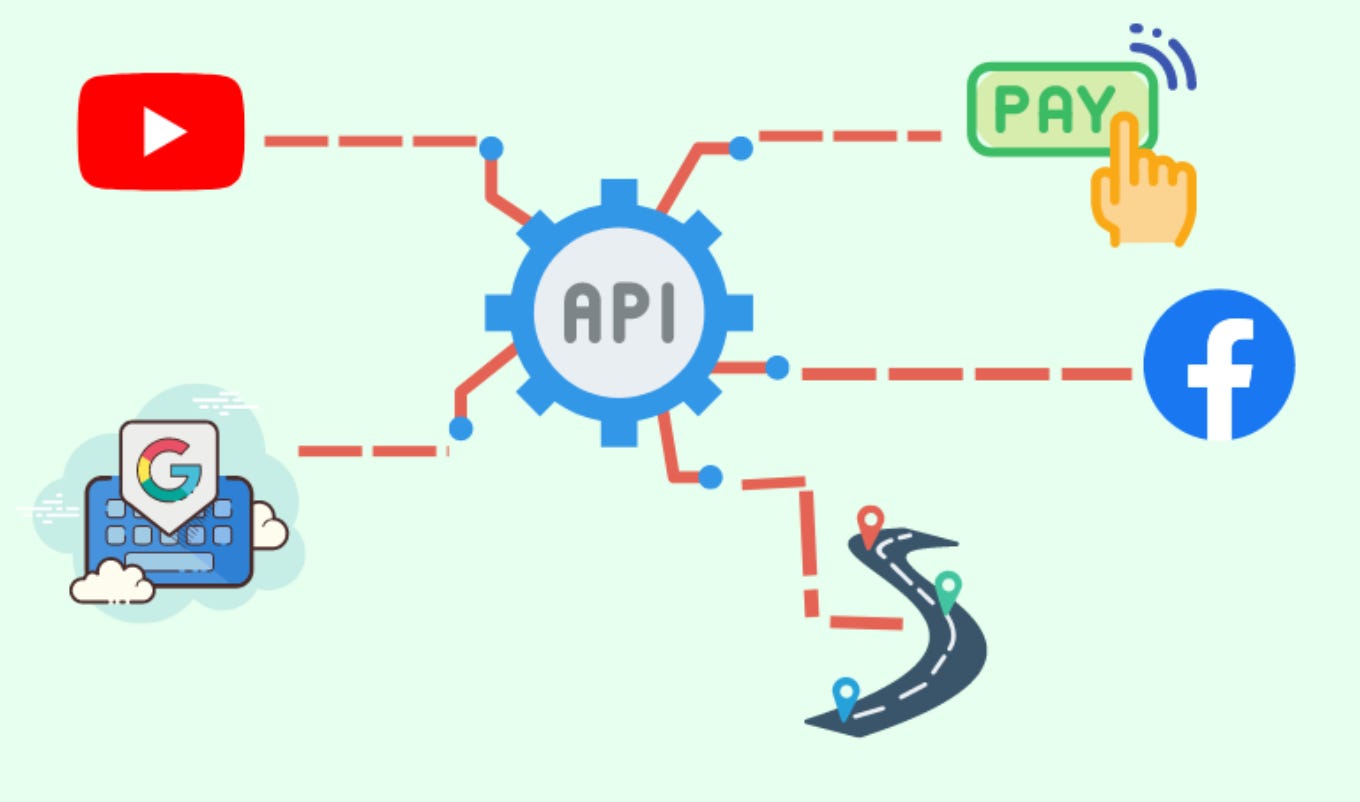
The more sustainable outcome is that new vibe coding developers will build software specific to their business and add in supporting software tools as API’s. This is the model where you build you a core app, but bring in 3rd party services like Google Maps for location, Stripe for payments, Youtube to embed video, etc. You don’t try to build (and maintain) all these 3rd party software integrations yourself even if theoretically you could.
Instead, you focus on the parts of the app which are core to your offering. For example, Salesforce has created their AgentForce suite of AI customer service agents to service this model. If you need a customer support agent for your app, don’t try and build one on your own, just plug in one of theirs, and let Salesforce maintain it.
Vibe coding doesn’t replace existing software, it instead creates new use cases through backend API integrations. The software companies just need to make sure they adapt and create these backend versions of their products.
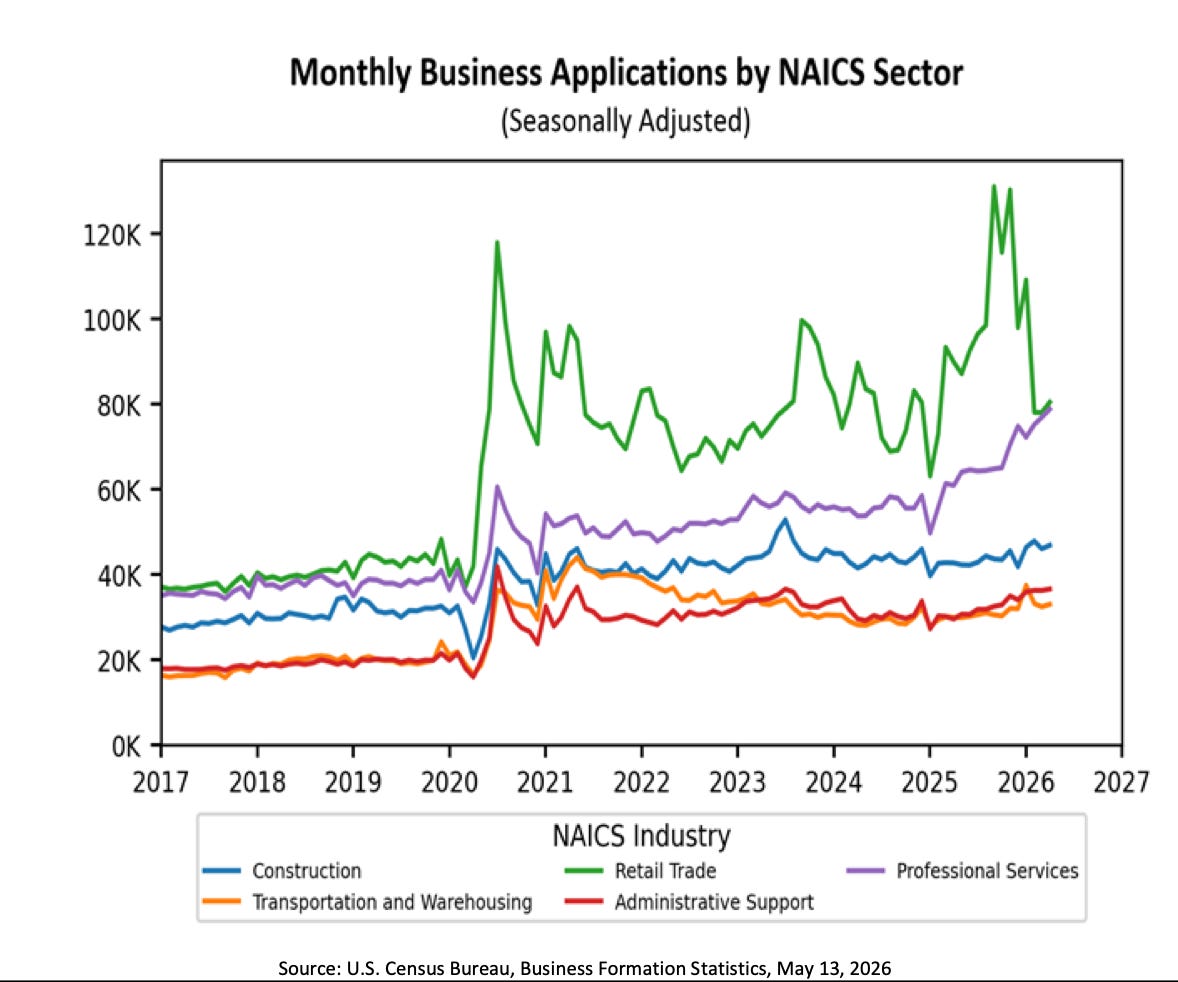
#5 Rise of the Solopreneur: New business formation has exploded since COVID. There are a laundry list of reasons for this; the need for side hustles to survive, the rise of remote work, wokeness in the workplace, job insecurity, and most importantly the ability to run businesses with the help of AI. AI is your expert partner for everything you don’t know.
For the software industry small business formation is a gold mine. Solopreneurs need tax software and email marketing programs (Intuit). They need content studios to make sure their logos and images are consistent across platforms (Adobe), they need AI customer support agents (Salesforce), and a cloud database for their AI agents (Snowflake). This is what the bears miss. They are picking apart whether an LLM can do some of these workflows. They are not thinking about the new entrepreneur who suddenly has to do business accounting, or manage employees and has no interest in creating their own software.
The bears are also missing how this whole segment of users is going to continue to grow in the future. The flip side to the white collar workers getting laid off by AI is they all have to start companies. Look at the rise in new ‘professional services’ companies.
#6 Clouds as Agent Platforms and Marketplaces:
