

It’s fun to read stories about great disruptive companies.
In the stories the author is able to pick out the a key design choice the scrappy company makes, which the sleepy incumbent under appreciates. This feature or design choice plays out over time and the scrappy upstart eventually disrupts the whole industry. By the time the incumbent sees the problem it’s always too late.
Netflix was like that. The key feature in the beginning was to be able to watch what you wanted, when you wanted in contrast to scheduled cable TV. Netflix also piggy backed for free on the high speed fibre cable companies were spending billions on to connect their triple play bundles to the home. And over time Netflix became a ‘smart’ media company able to learn in real time what its customers liked watching and build algorithms to keep them binge watching.
I’ve read that in the beginning the cable executives studied whether Netflix was a threat, but saw it as additive to cable viewing, and only 3% of their subscribers also subscribed to Netflix so it wasn’t a big deal. Back in 2004 Netflix had 2.6 million subscribers and only made $22mn in net income so you can see why it was easy to dismiss.
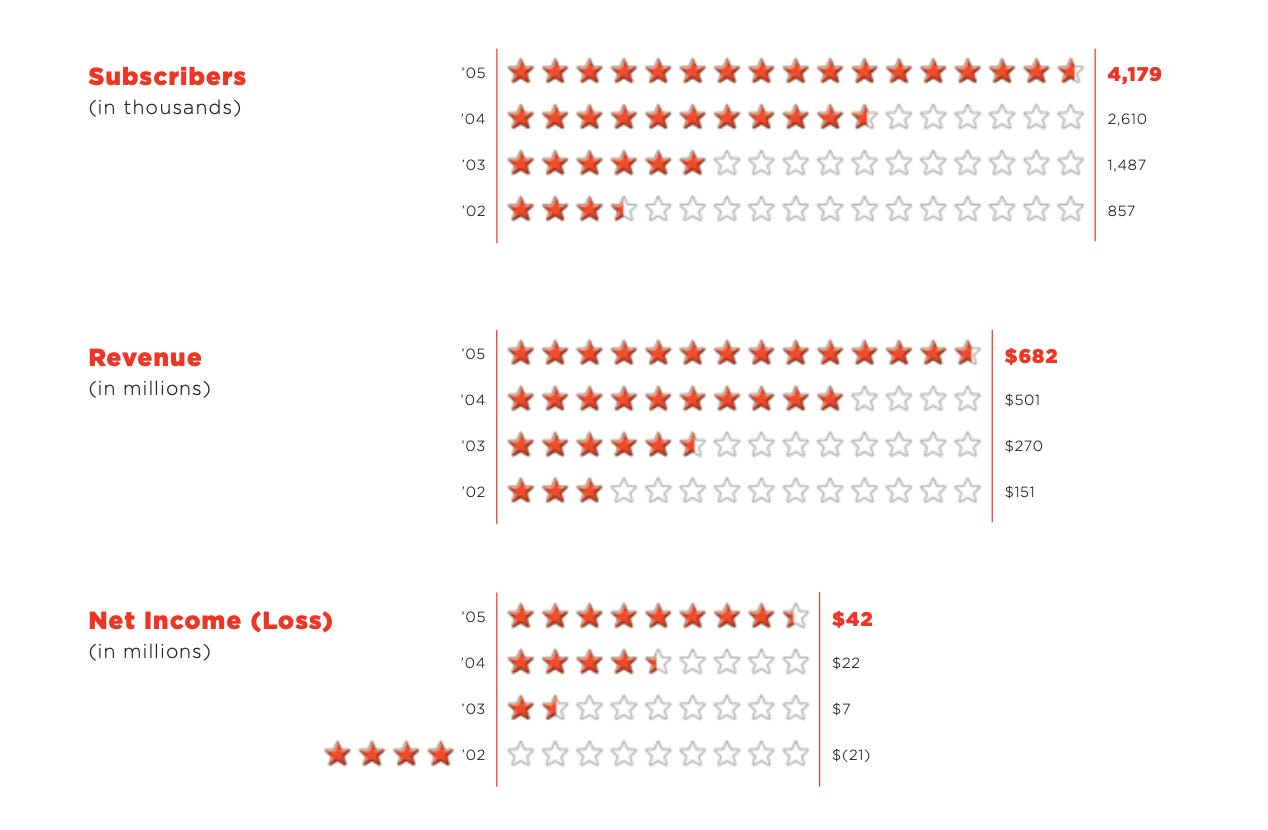
But Netflix had developed a disruptive product and like a sharp knife they relentlessly pried cable customers away from their dumb bundle of channels. In the end it disrupted the entire cable industry and changed how customers consume media.
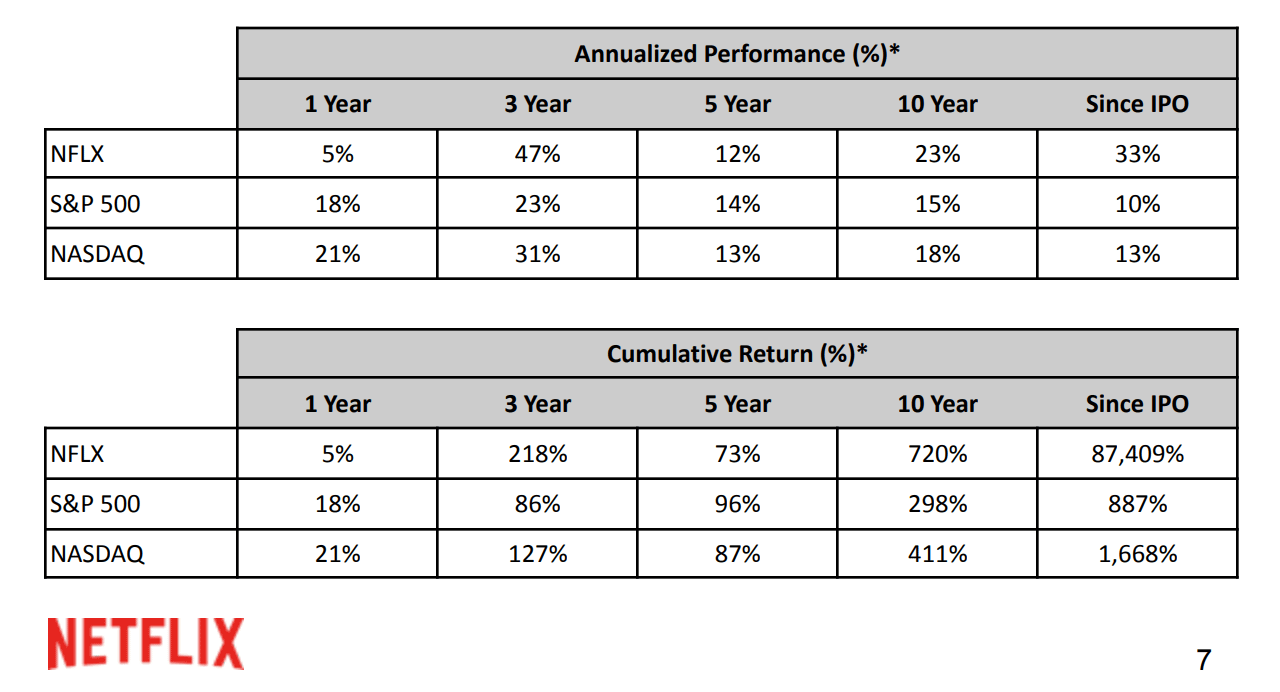
And the stock price performance was amazing.
The story of Apple and the iPhone was similar. AT&T thought the iPhone would be additive to the network and grow data consumption. It did, but there was a key feature AT&T didn’t appreciate, the App Store. AT&T thought they had considered every angle. They owned the spectrum, and they had the customer relationship with direct billing to the customer, so there was no way to get disintermediated. But Apple created a digital market place inside their operating system that bypassed AT&T all together. And they created the AppleID so all the apps and data related back to an Apple ID and not a phone number. In hindsight AT&T was too far behind technologically to ever have imagined what was going to happen. Their business was managing infrastructure they had no way to connect dots and see what Apple was building.
Again, we look back at these features and design choices and see how they steadily play out over 20 years creating life changing value for the disrupter and misery for the incumbents.
But there are two problems with these ‘stories’.
First. These trades are always way harder than they look with later with benefit of 20 years of hindsight. As an investor when you are in the trade it’s hard. It’s never clear how big the trend is going to become. Then there are periodic counterattacks by the incumbents where they create their own version of the product. Or, new start-ups with a seemingly better tweak on the product. Then there are the years where the growth rate slows and everyone says it is over. How many 40% drawdowns did Netflix shareholders have to sit through along the way?
And the disrupter’s stock is always ‘expensive’, so even if you ‘get it’ is it really worth that much? And what if you are wrong? With such a high valuation if anything goes wrong the downside will be painful.
The Second problem with these business case studies.
Stories are fun to read but they don’t make us money.
Fine, Netflix and Apple were big successes, but show us the next one?
Show me the next Netflix that everyone under appreciates today and which I can buy now and make 10x.
Sadly, the business case study analysers are always quiet on this. Great at analysing things in hindsight, but no use at making us money.
Which is why we come to YWR.
We always want the trade. How do we make money?
So would you be interested in a Netflix style disrupter, except bigger?
I mean potentially massively bigger.
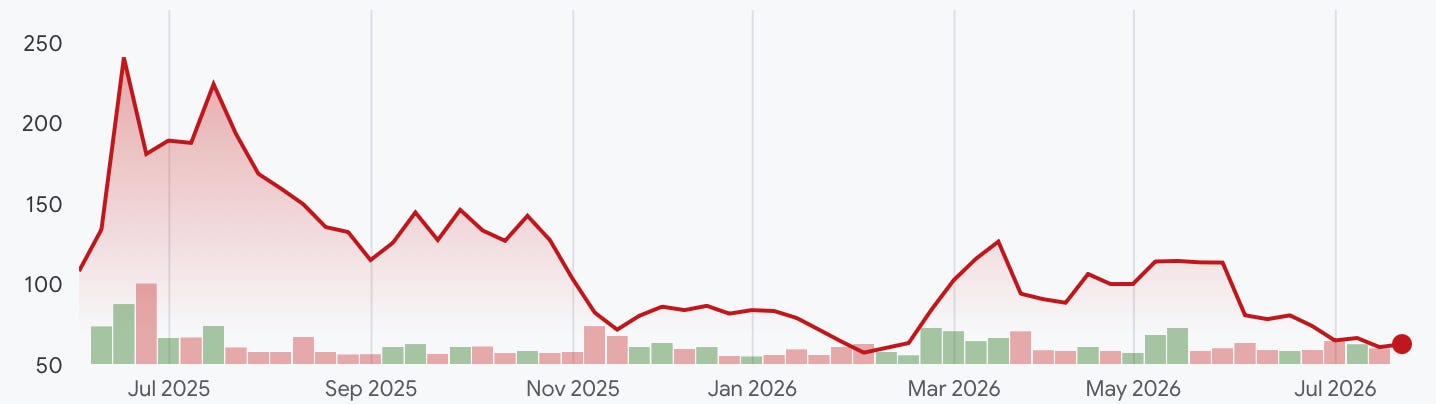
And would you be interested if this disrupter has market cap of just $15 billion and is trading on the lows?
If so come with me.
