

I didn’t want to go to my mom’s boring Church event.
But I said I would.
It was an evening talk about home health care for the elderly.
But I’d promised I’d go early and help set up chairs.
Now I’m glad I helped out with the church event.
The talk was more interesting than I expected.
And I think God rewarded me with a stock idea.
TL/DR: Healthcare costs are exploding and you will likely die in your home with a nurse. Not go to a nursing home. But there is a good stock to play this.
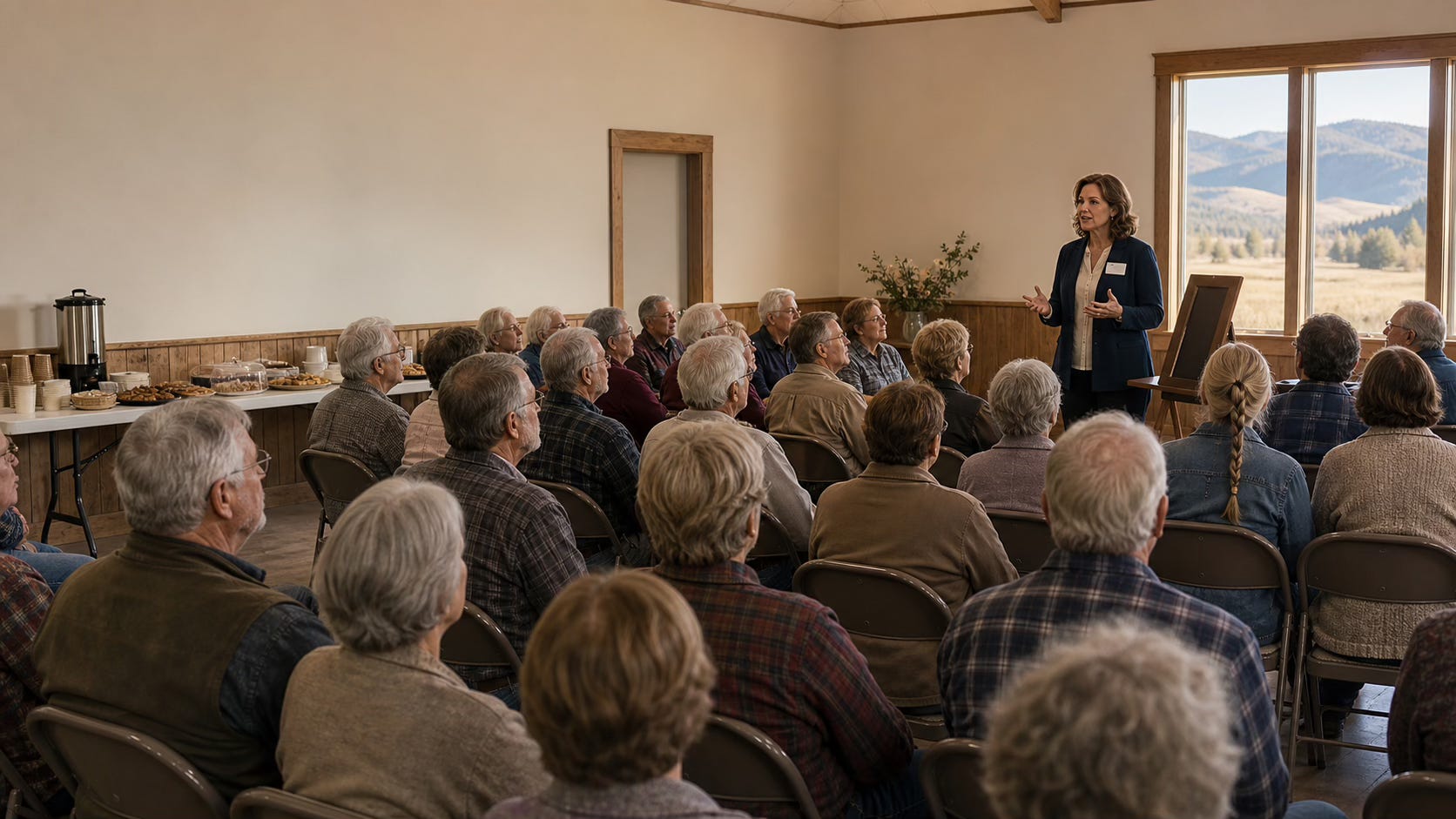
A nurse from a local hospice provider (healthcare at home when you are dying) had come to speak to the elderly at the church about the new trend in ‘palliative care’; low acuity health care at home. She was speaking to 30 elderly in a church hall with everyone sitting in rows of folding chairs. In the rear of the room there was a table with snacks people had brought.
It turns out if you are homebound and have 2 co-morbidities Medicare will pay for nurses to visit you. This is ‘palliative care’. And it is growing quickly. Our nurse assured us everyone in the room would qualify.
The nurses check in on patients in their home and help manage the mix of drugs, doctors and tests these patients have accumulated across their different ailments. This firm’s local palliative care practice had grown from 40 patients 4 years ago to over 200.
The nurse who was presenting spoke well and her anecdotes about what she sees everyday visiting patients helped explain the challenge and why palliative care is growing quickly.
What often happens is a patient goes to their primary physician and gets referred to various specialists for different ailments along the way. Each specialist recommends their own drugs and tests. ‘Take this and this 2/day and check in for a blood test every 3 months’. These prescriptions and tests accumulate.
The palliative care nurse comes to the patient’s home and sees the overall picture. She also sees where the patient lives and how well they can move around the house. And often she can make judgements to reduce some of the pills and tests the patient is taking. ‘I think you can stop taking this, and your breathing is improving so take this test every 6 months instead of 3’. The nurse can give sensible advice from seeing the whole picture on a regular basis, which the individual specialists cannot. She can also prescribe specialised home health services. “I think you need some physio.” or, “you need speech therapy.”
As the talk unfolded and the questions from the elderly started I realised the following:
#1 Home health care could be a better model
To me and everyone else in the room listening to this palliative care sounded highly appealing. I can see why it is growing. A sensible nurse comes to your house, ‘checks in on you’ and has a normal human conversation about how you are feeling, all the drugs you are taking, which of your problems are getting better and which are getting worse and need help. Effectively, a medical advisor.
It also came up that in the meeting that in this town getting access to a primary care physician was challenging. The town has been growing rapidly and there aren’t enough doctors. The nurse explained that some or her patients are using palliative care as their primary healthcare.
And another massive realisation.
#2 These nurses are also financial advisors.
What I noticed from the Q&A from the elderly in the room. Nobody knows what insurance and medicare will pay for and what it won’t. It is a confusing maze to them. The nurses (or at least this nurse) had a very good understanding of anything related to Medicare; what was covered and what additional services she could prescribe. She knew details like ‘Medicare will only cover this for 15 days, so let’s hold off on this. We don’t want to burn up our 15 days right now.”
And related to this.
#3 You will die at home. Nobody/few can pay for nursing homes anymore. The costs are going through the roof. What the elderly are realising is their insurance plans didn’t cover nursing homes, or for only 4 years, or there is no availability in their town, or they can’t afford to pay for it out of pocket. In this town the nursing home capacity was declining. There used to be 3 nursing homes, but 1 just closed.
The message from the nurse was the future trend is you will die in your home with your family taking care of you combined with hospice care.
#4 The company this nurse worked for might be a good investment.
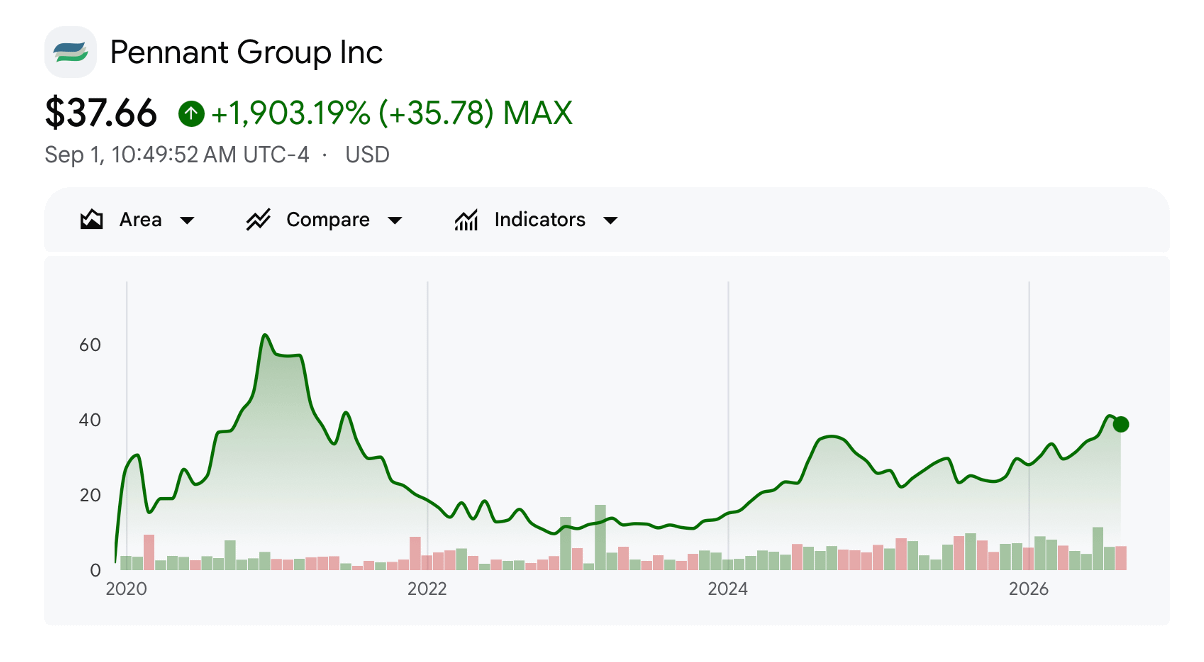
The nurse worked for a subsidiary of Pennant Group ($PNTG) which specialises in hospice and home health care. Q2 2026 earnings grew +20%. Pennant acquires local hospice businesses and provides backend services while letting the local business operate under their own name with their own management.
Healthcare is not my specialty, and likely I’m missing important details, but here is what looks interesting.
Investment Case Basics
#1 The elderly are a growing demographic.
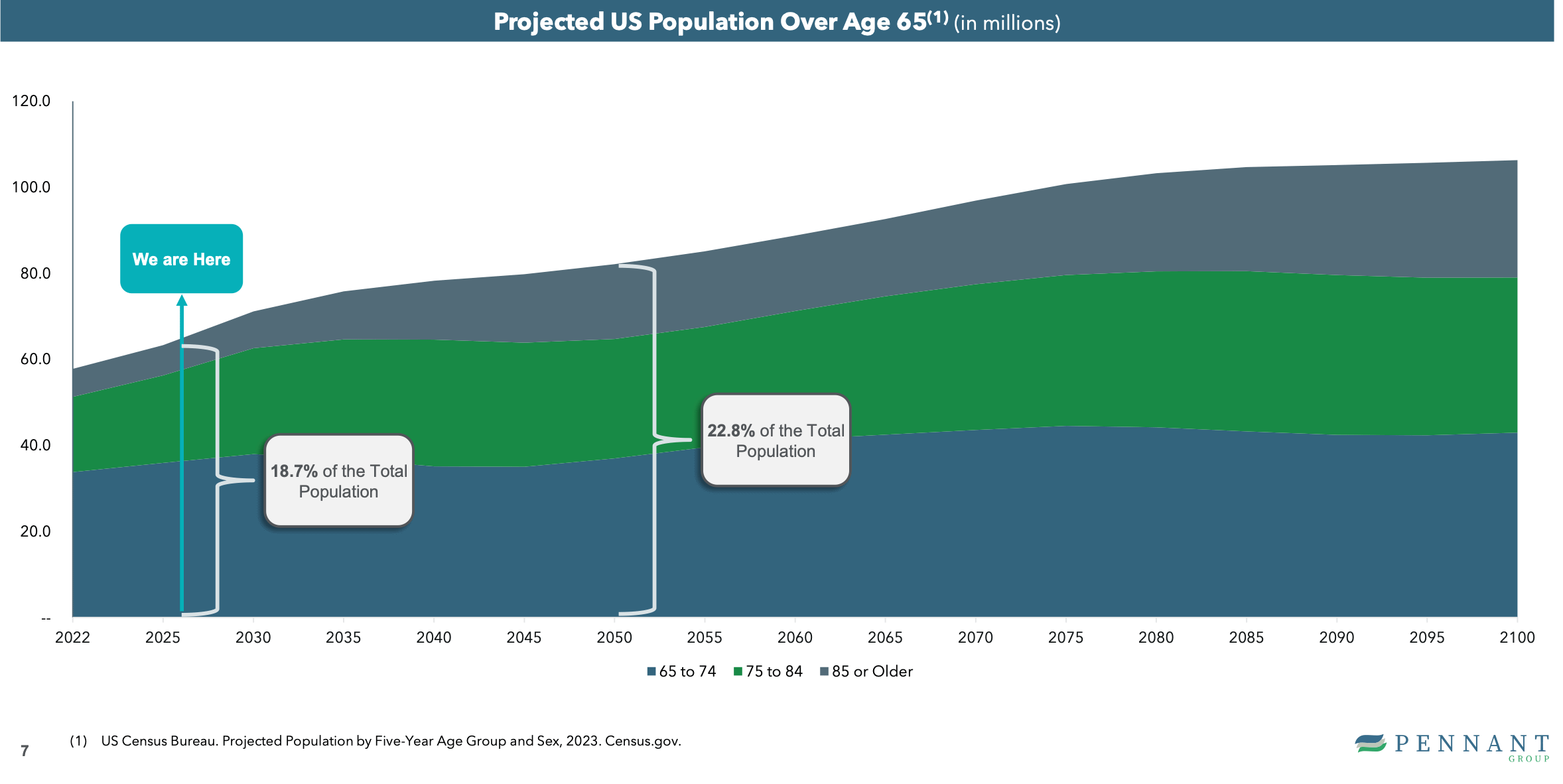
It’s not massive tailwind, but the elderly will grow 1.1% year through 2050 and expand to 22.8% of the population by 2050.
#2 The home health care market grows faster
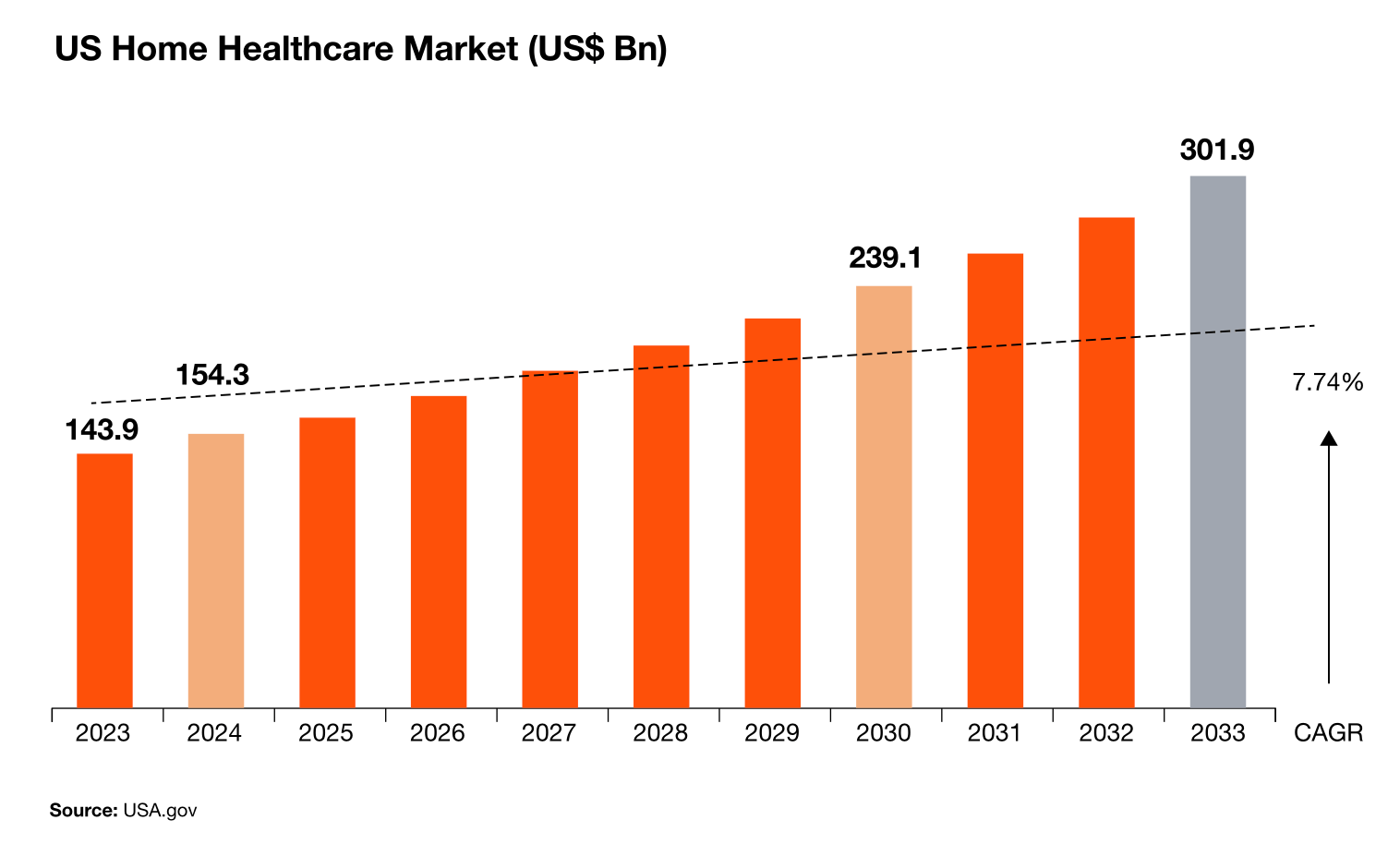
The rising cost of healthcare, and lack of nursing home capacity is forcing patients to turn to home healthcare as an alternative, especially for end of life care. PWC expects home healthcare to grow at a 7.7% CAGR.
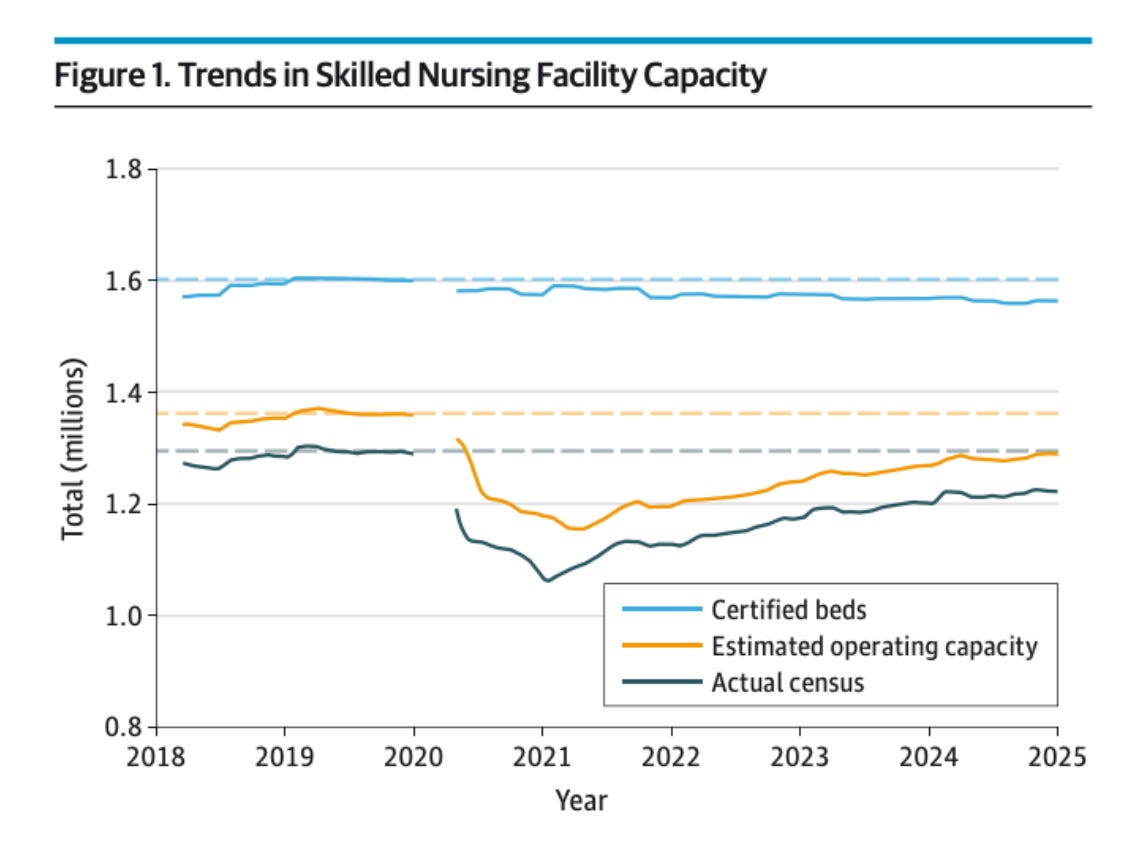
A key forcing function for home healthcare is that nursing home capacity is flat/declining. From 2019-2024 effective nursing home capacity declined by 5%.
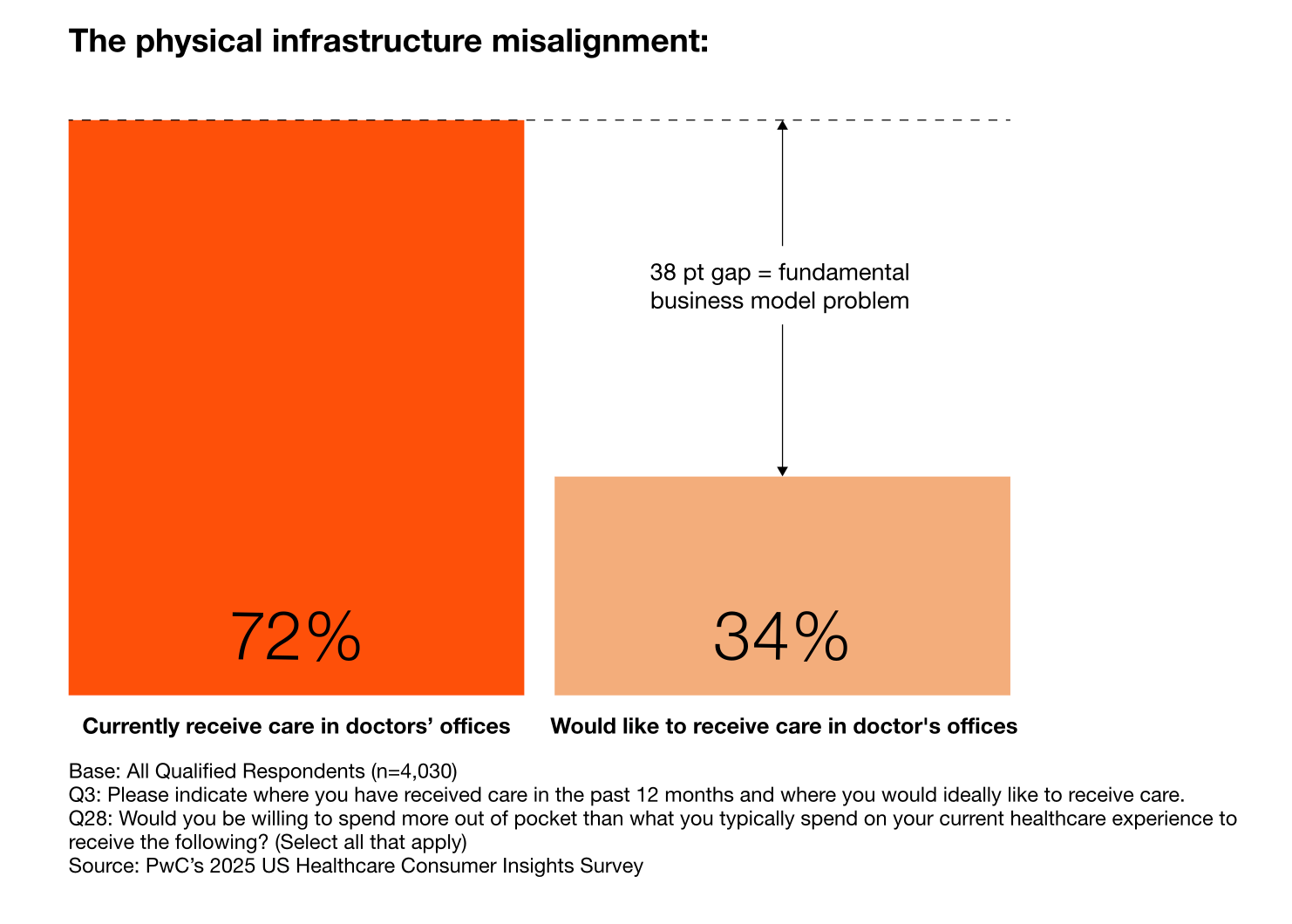
#3 Patients prefer home healthcare to doctor visits.
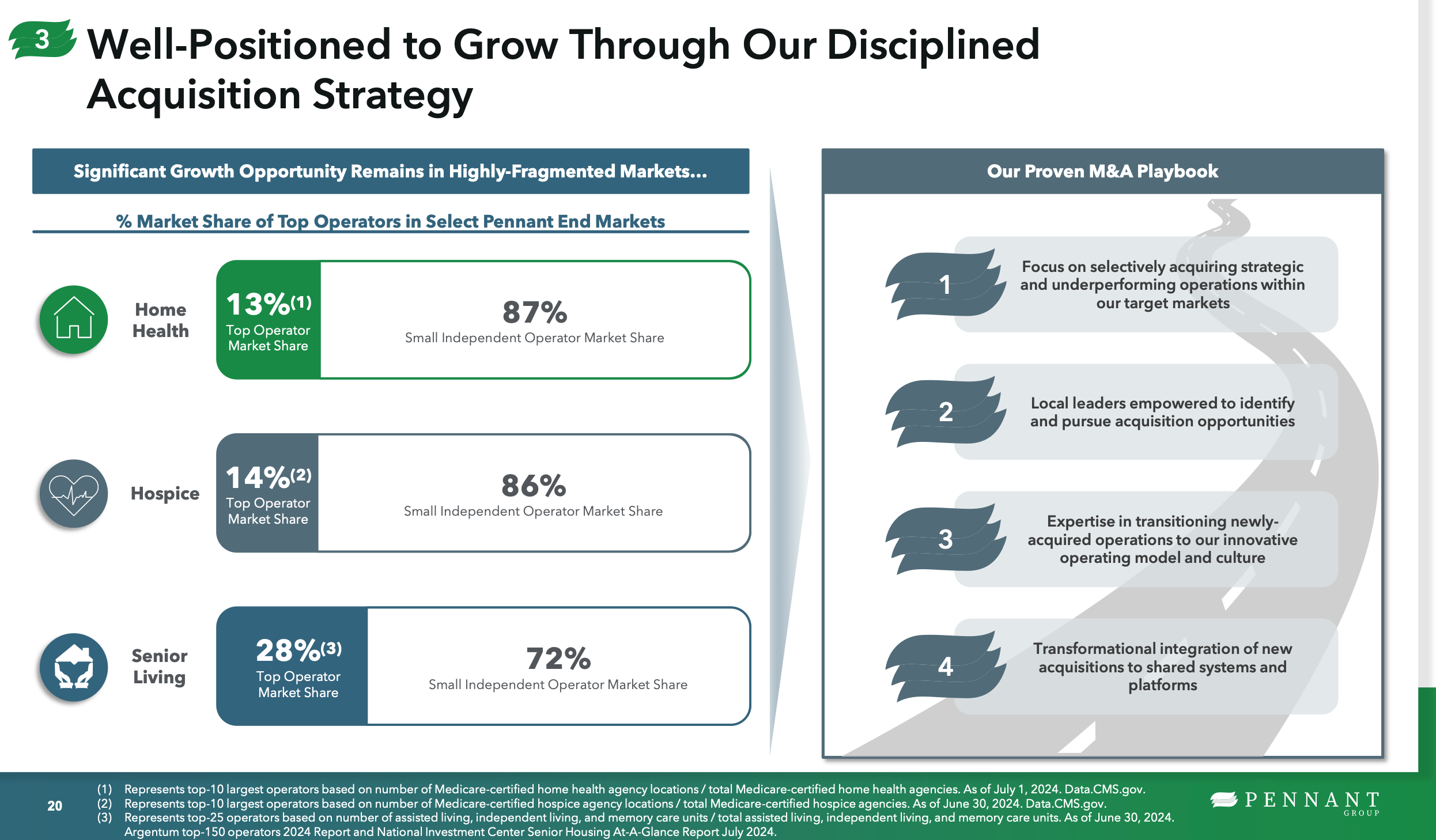
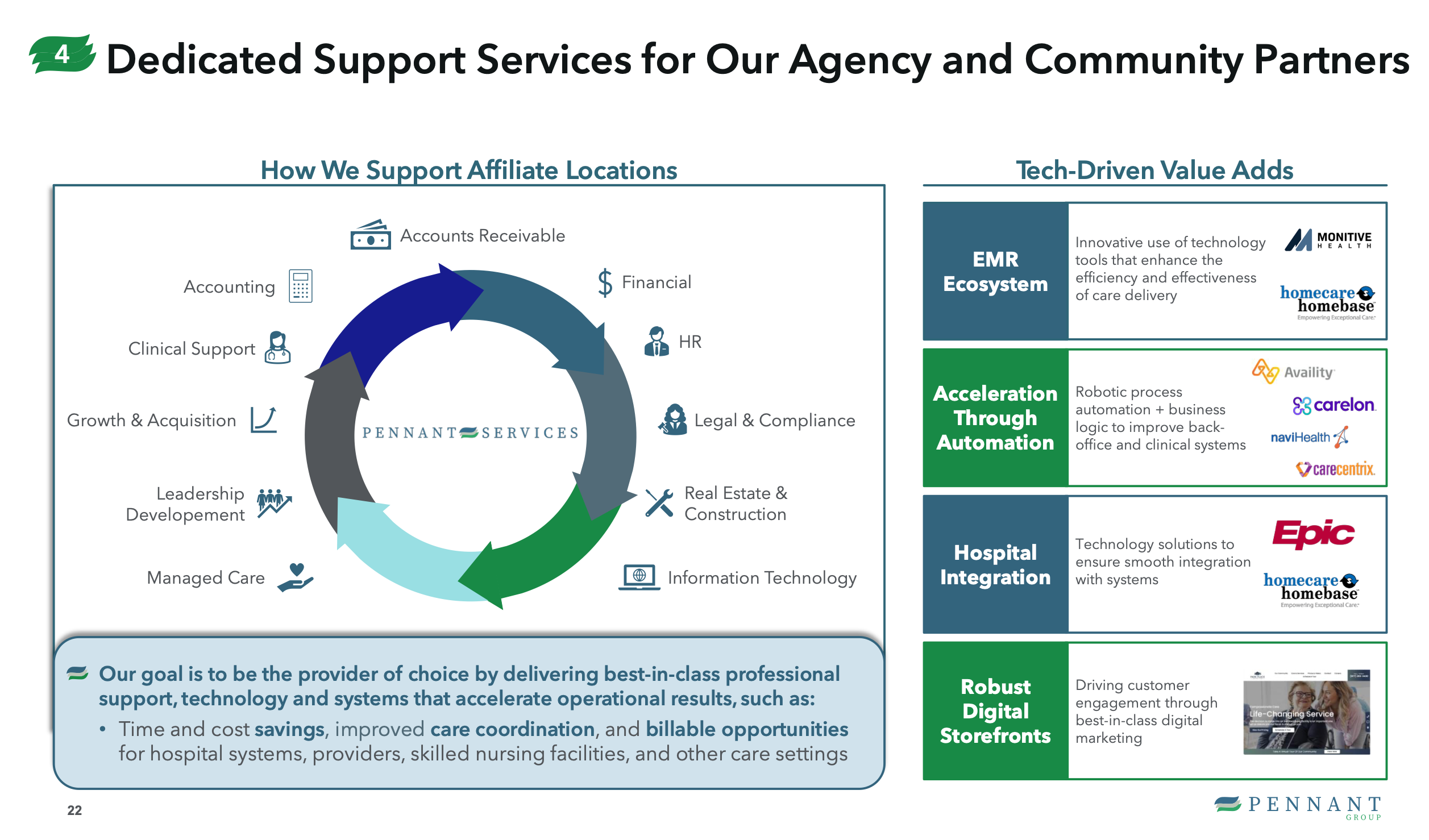
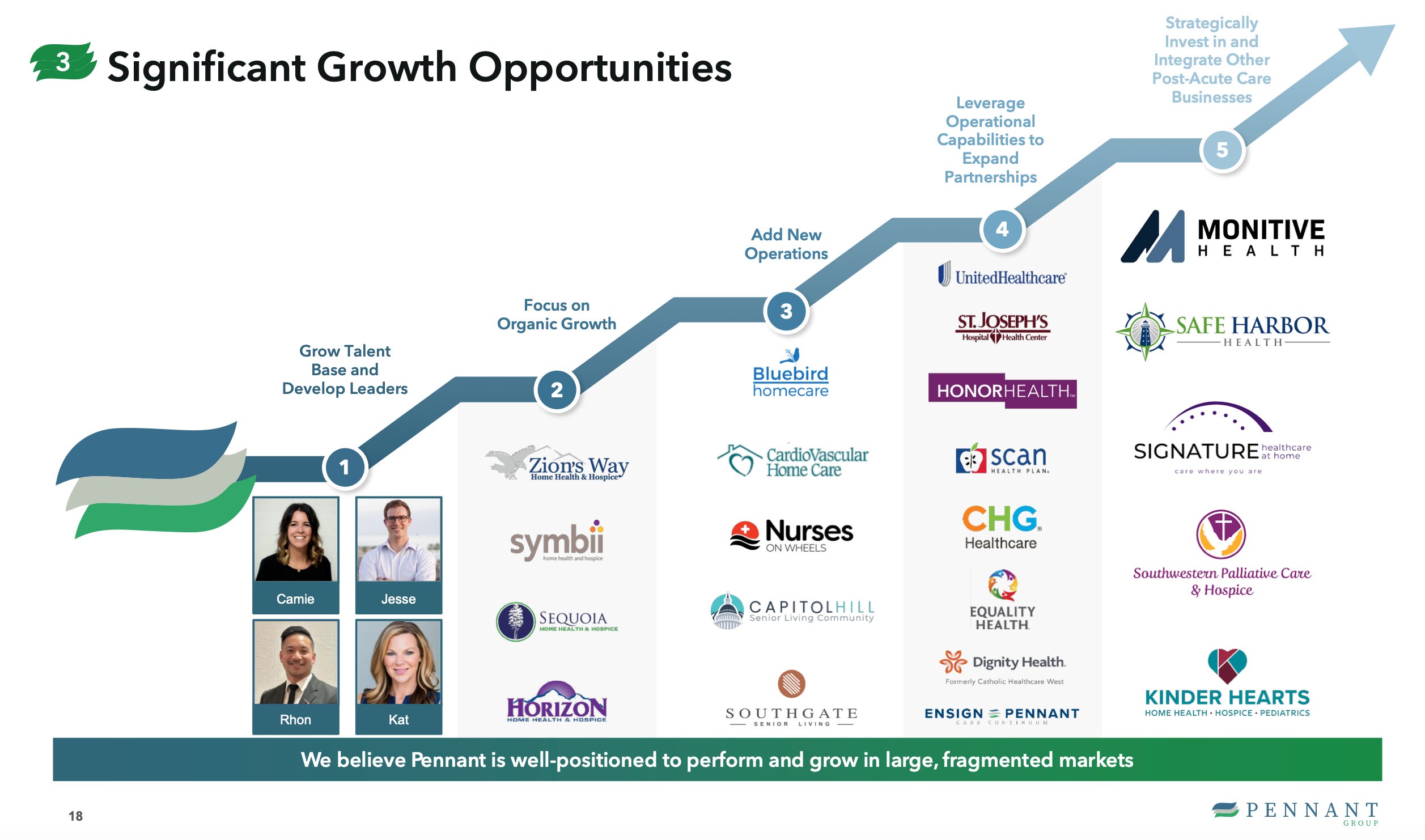
#4 Pennant Group super charges this growth by making acquisitions and consolidating a fragmented market.
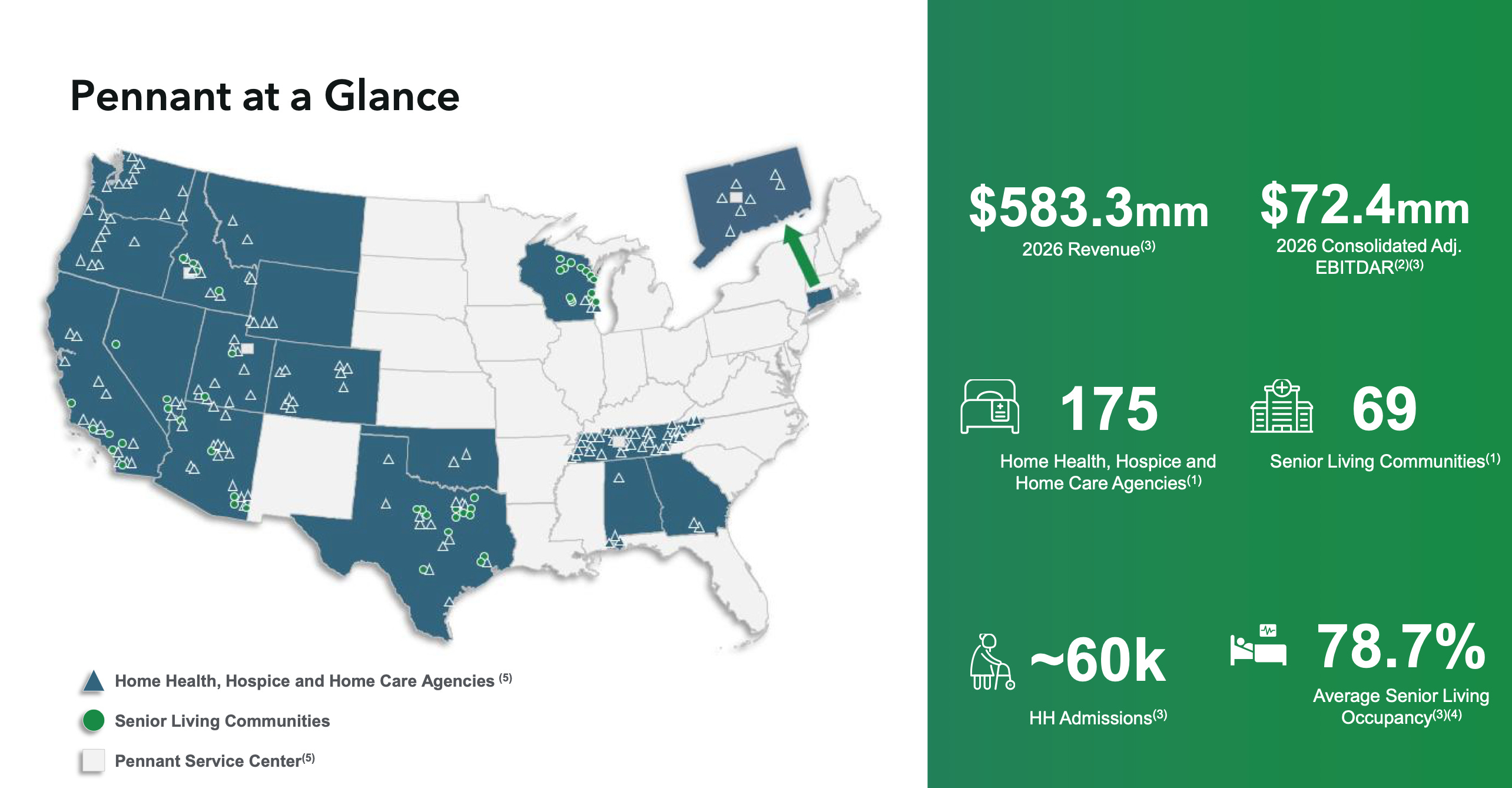
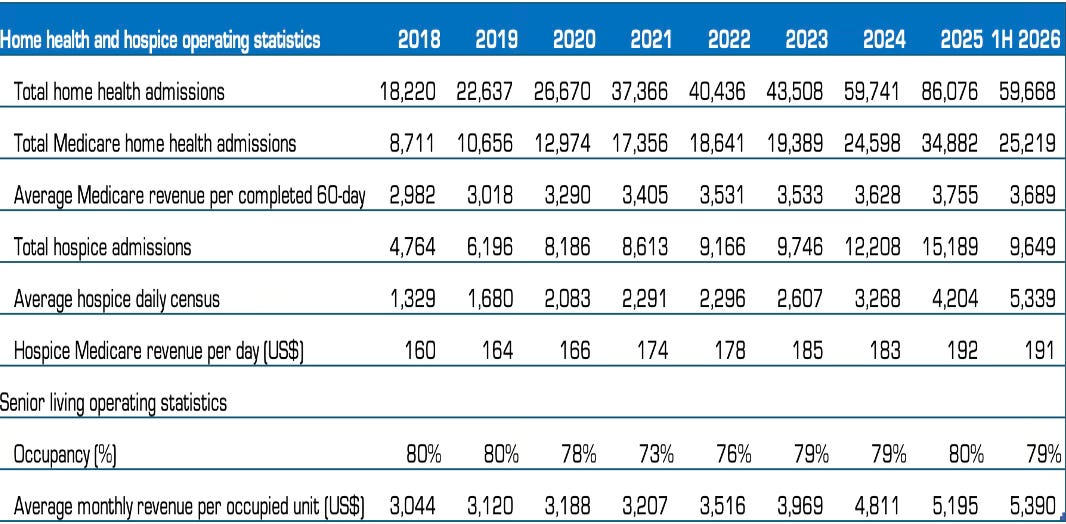
Pennant has made 92 acquisitions since 2020.They have expanded across the Western US, are building out the Southeast and recently got a toehold into the Northeast with their equity stake in Hartford Health.
#5 The decentralised model works well for this industry.
Pennant touts it, and this nurse confirmed it. Pennant largely lets these local healthcare businesses manage themselves.
What they and I realise is customer acquisition is highly localised through referrals and community groups. Pennant needs to have local business CEO’s and nurses who like where they work and fit in well with the community. They need strong relationships with the local doctors, hospitals and churches. It can’t be too corporatey. This isn’t like selling Coca-Cola where you ram a commoditised product down the consumer’s throat. These practices are built up carefully through relationships. So Pennant, the mega corp, sits in the background watching the numbers, and providing the technology, while the nurses go out to the churches and tell how they work for a small town business they like, which is flexible and part of the community. It’s a good combo, and it works well for this industry.
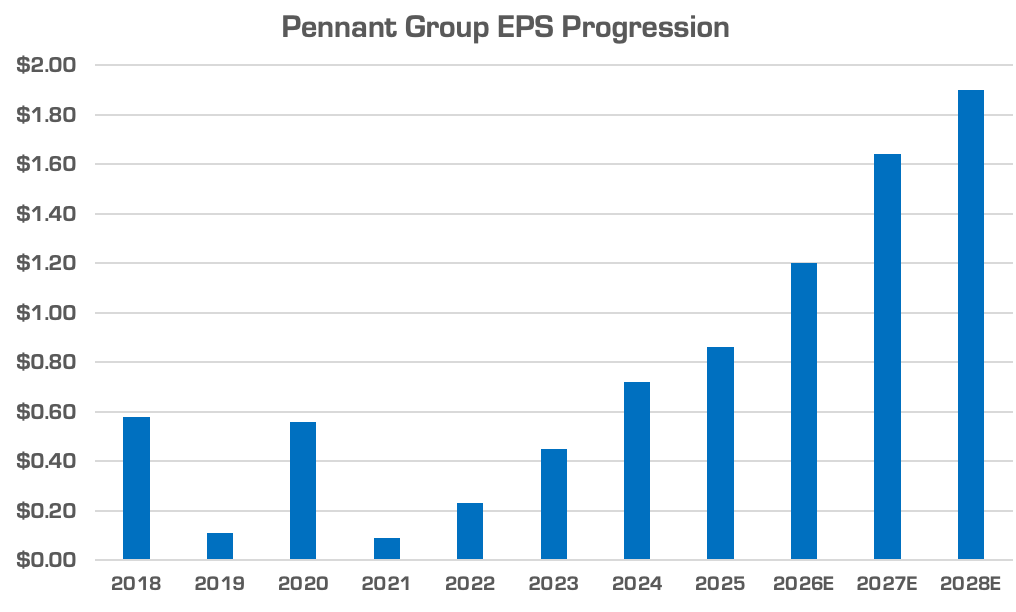
#6 Pennant is growing like a weed
Earnings were hit during COVID, but since 2023 Pennant has really got its feet under it and the growth is coming through.
The Negatives:
Again, I don’t know healthcare services well, especially all the nuances of Medicare, but here are some general things to note.
Pennant Group is already an expensive stock. It is trading on 23x 2027 consensus estimated EPS ($1.64). So the growth has not gone unnoticed by the market, but this trend in home healthcare seems massive.
There are no strong network effects. It’s a roll up platform of local home healthcare agencies. There are some synergies when Pennant buys specialty care businesses which they can plug into their home health care customer base, but this is not an exchange.
The biggest customer is Medicare. There might be 10’s of thousands of patients, but Medicare is the payer. And Medicare is trying to control costs and crack down on fraud in the home health industry. So even though Medicare sees home health as a future trend to reduce the cost of caring for the elderly, they are trying to limit the size of the yearly reimbursement rates. The fraud crack down might be good for highly compliant, publicly listed players like Pennant. The big get bigger.
Nurses are in high demand. It’s a challenge to balance the rising wage costs for nurse with Medicare reimbursement rates. Maybe this plays to the advantage of the bigger players like Pennant.
Palliative Care doesn’t make money. Full blown hospice care makes a lot of money for Pennant, but the earlier stage Palliative care, with the nurse checking in on you, isn’t a money maker. Maybe it will be in the future if Medicare increases reimbursement rates, but for now it acts more like a feeder for the hospice business.
Summary
Home healthcare and hospice is a lower cost solution to end of life medical care that the elderly increasingly cannot afford. The era of nursing homes is over.
This is a powerful trend nobody is talking about because they are all focused on AI and now we have a good $1 billion market cap play on this which nobody is talking about.
I feel blessed to have gone to church and learned about Pennant.
Below is the historical financial model on Pennant if you want to take a closer look and try your hand at some forecasts. I just used the consensus EPS estimates.
