

What are the two biggest estimate revisions trends in the world?
What are two mega-trends investors fear could end any day?
The two are the same.
I’ll explain what I mean.
Let’s go over the global factor model rankings.
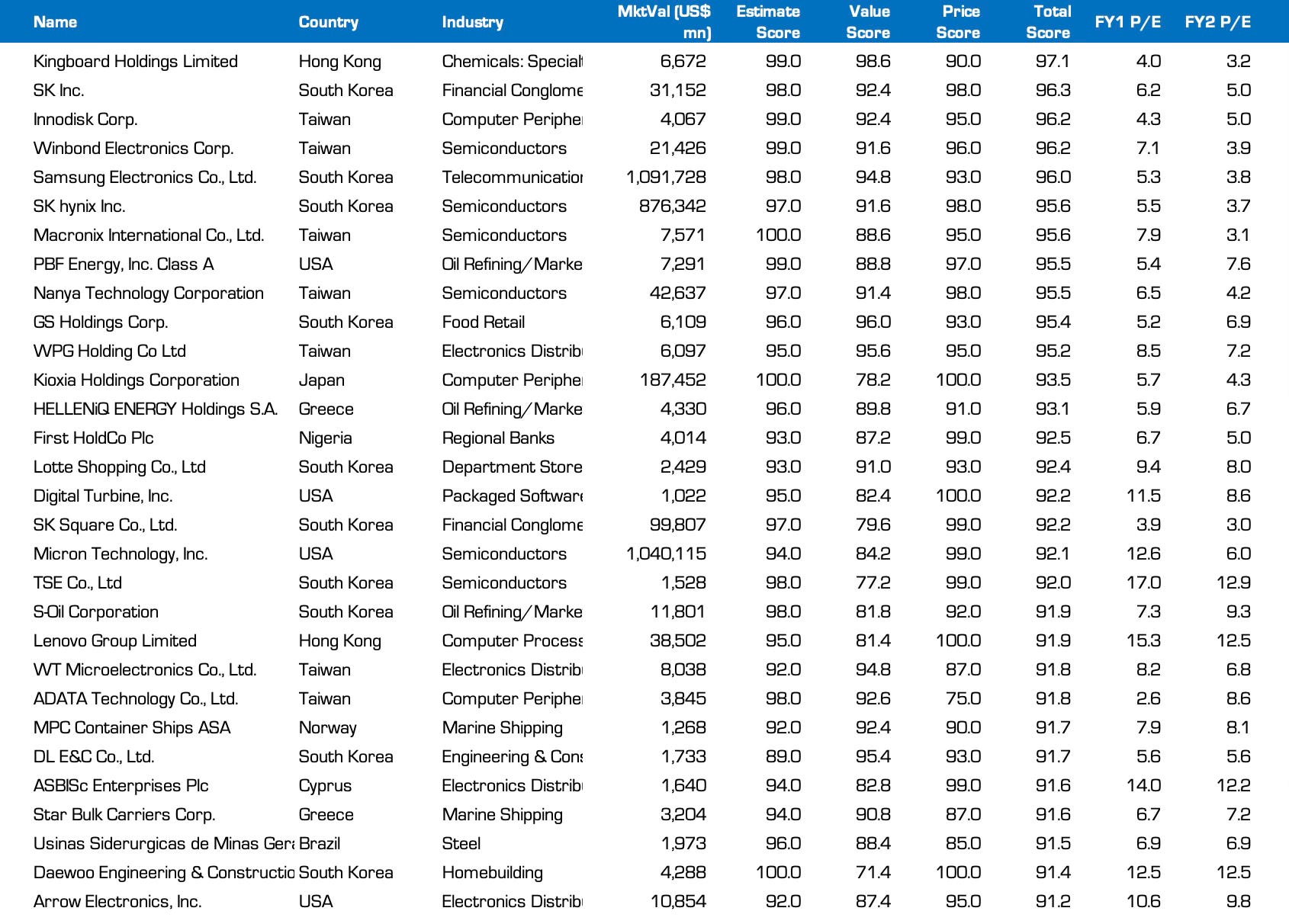
YWR Global Top 30
Why do estimate revisions work?
Let’s remind ourselves how we use the global factor model.
The YWR Global Factor Model rankings are a monthly screen of the top ranked stocks on a mix of estimate revision momentum, valuation and price momentum. Estimate momentum is the most heavily weighted factor Total Score so the screen mostly surfaces the strongest estimate trends in the market (you can also filter by any of the sub-scores; estimates, valuation, price momentum).
This gives us a dashboard of where estimates are moving the most across the world. And if estimates are moving strongly it tells us there is a story. Something is changing which the sell side experts didn’t predict. And because of ‘anchoring bias’ most of the time these estimates will continue to trend upwards/downwards in the future.
Our job is to understand the narrative and use our imagination. What’s happening? Why are these estimates rising/falling? What’s new? Could these trends go much further? What inning are we in?
I wrote about this more thoroughly in Why Estimate Revisions Work. It’s an important behavioural bias to understand.
The Top 5 Ranked Industries
To determine the top ranked industries we take the top 300 ranked stocks and group them by industry.
And this is where our two mega-trend present themselves.
The two big trends are Cybertron and the Iran War.
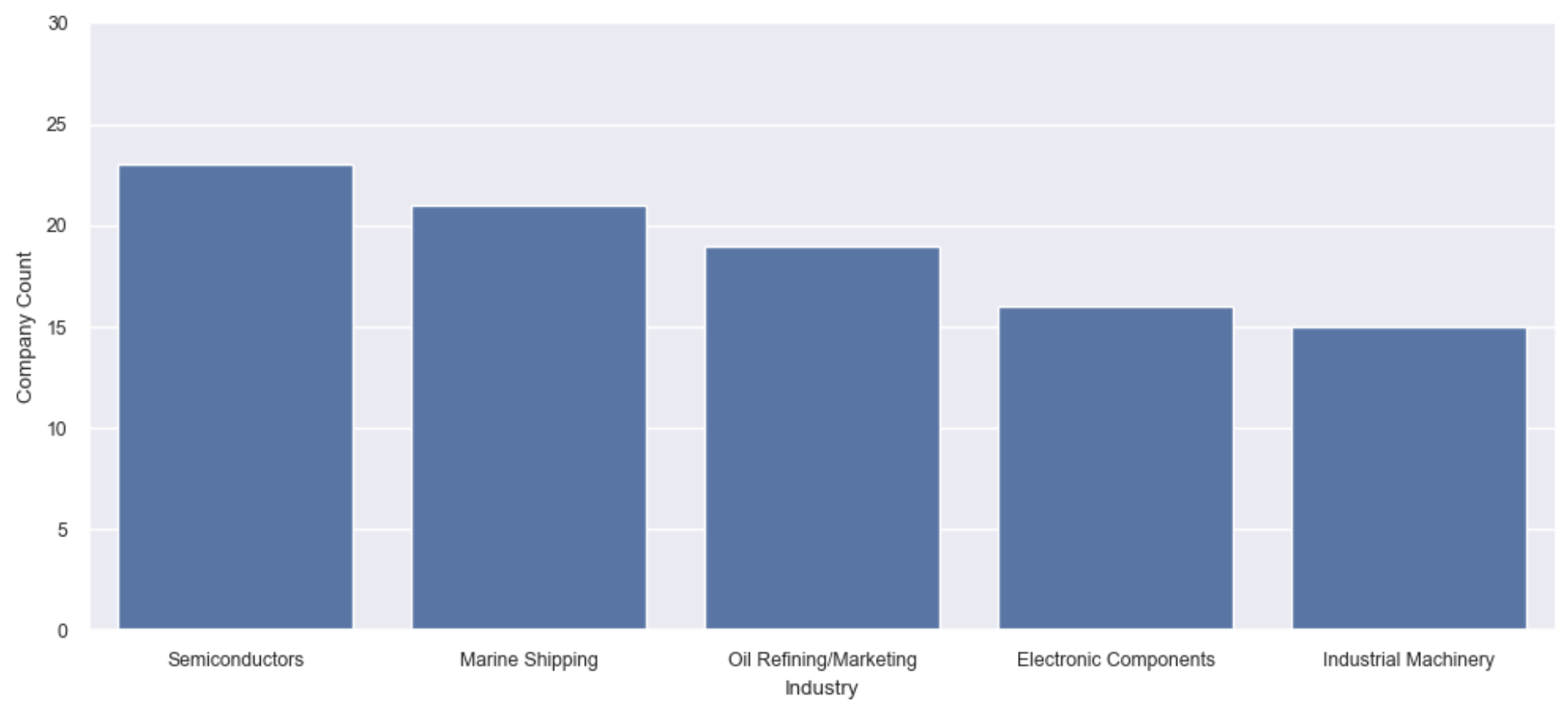
Semiconductors, electronic components and industrial machinery are all Cybertron Themes.
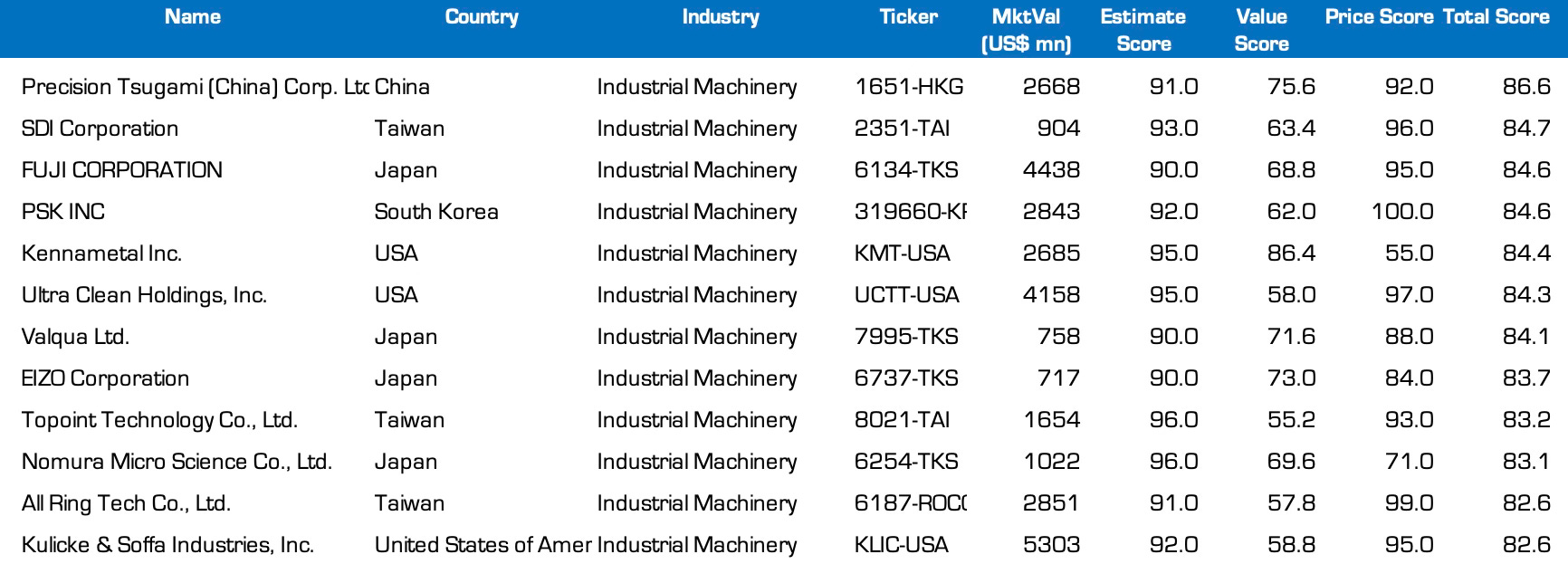
The other two, Marine Shipping and Refining, are Iran War beneficiaries. Oil and Gas Production didn’t make the Top 5 but also scores well and is also an Iran War play.
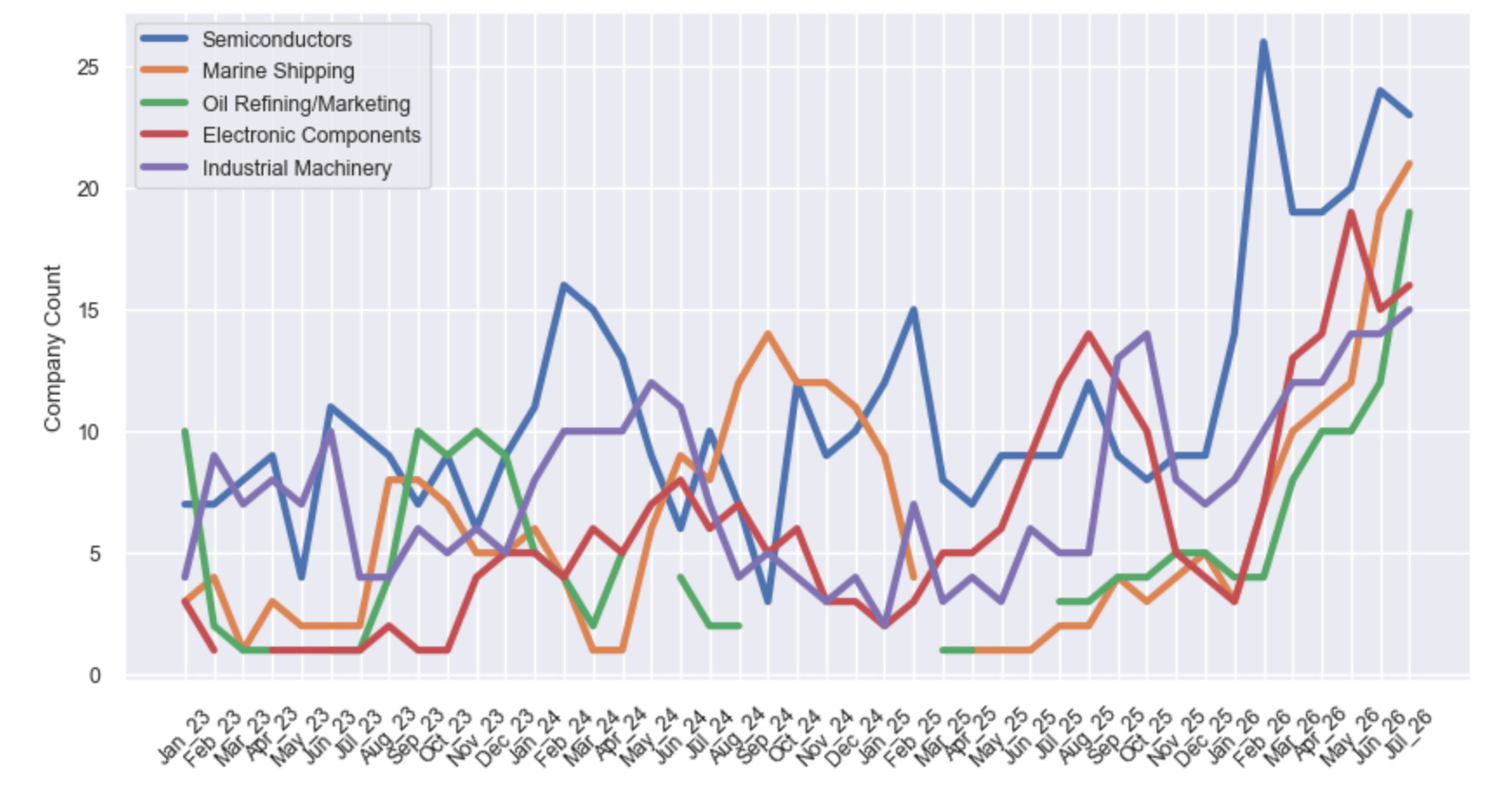
In the monthly chart you can see how all 5 sectors start rising sharply at the end of 2025 and early 2026.
The Iran War Theme
This theme is the most interesting. It impacts everything. Energy costs are rising, shipping rates are rising, refining margins are exploding, and yet nobody wants to own these sectors. Investors are afraid they will come in, buy on the highs, then look like an idiot just as everything gets resolved and crashes.


I am an energy bull anyways, so it’s easier for me, but this trend looks massive. Like world changing massive. My initial view when the war started was that it might last a few months and wouldn’t be a big deal, but the situation is getting more complicated by the day. Now I can imagine this going on for years, like the Ukraine.
Maybe we are at the start of a multi-decade re-architecting of global energy away from the Middle East. Maybe it’s too risky to have so much energy coming from such a volatile place. The shift will come in many forms. More supply from the US and Canada (How Qatar changes everything), new drilling and exploration in Africa and South America, new pipelines to bypass the Straight of Hormuz, nuclear and a shift to renewables. This is many trends across different industries and around the world, but with one theme; less dependence on hydrocarbons from the Middle East.
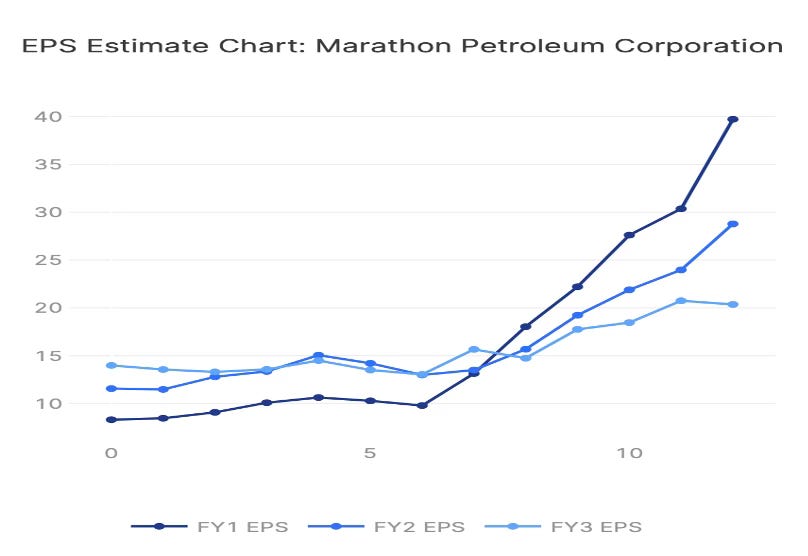
In the meantime there is no quick way to build new refineries, but analysts expect the bull market in refining to collapse over the next 2 years. Marathon is supposed to make $40/share in 2026, but this drops to less than $30 in 2027 and $20 in 2028.
That’s why I say this is the is biggest trend investors are afraid to own. It’s all going to collapse at the end of this year.
And all the Wharton MBA’s at the hedge funds hate the idea of buying a capital intensive, highly cyclical industry like refining. Their programming is to never buy those industries and that ‘geopolitics’ is too hard to predict.
But what if I pitched it this way? Would you like to own an industry where you run a complex, expensive factory that takes 7 years to build, and I just evaporated 20% of your competition.
There is now a 20% supply/demand mismatch and no competitive response for 7 years. Oh, and because public investors are negative on you, you can take all the supernormal profits and buy back your shares at low valuations so the benefits accrue into the future forever.
Shipping is another one.
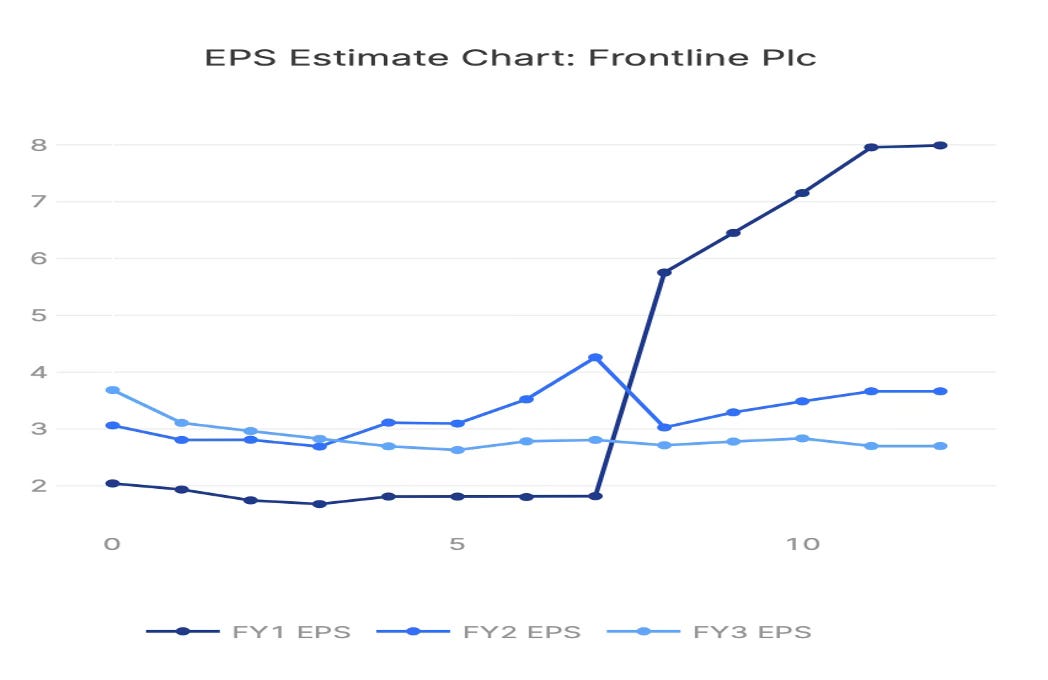
Shipping seems like a one dimensional chaos trade nobody wants to own. But if energy supply has to be more distributed, and the global maritime shortcuts (Panama Canal, Straight of Hormuz, Red Sea) are impaired does the world require a lot more ships?
The data tells me there is a bull case in shipping, but nobody can articulate it other than it’s temporary. It’s just a matter of time before the shipyards churn out more ships and crash the bull market.
I don’t have the answer on shipping, but sometimes it’s a good thing if nobody can see why a bull market will continue. The best bull markets are the ones nobody expects. If it has a nice trend that McKinsey can explain in a Powerpoint, then companies will flood it with capital and ruin it.
I’ll probably add a bit to Frontline, even if I shouldn’t.
Now on to the world according to Kingboard.
Kingboard Holdings
What is going on with this $6bn ‘chemical stock’ listed in Hong Kong?
Why is it the top ranked stock in the world?
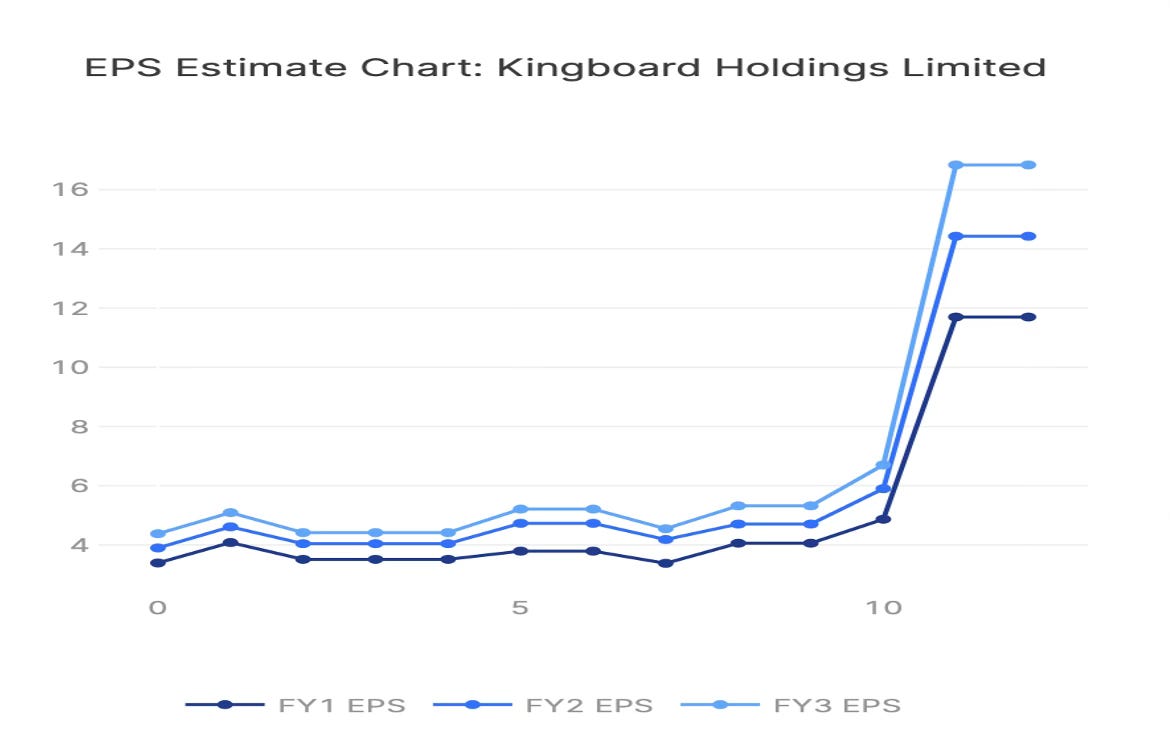
Kingboard makes printed circuit boards, but also glass yarn, which are both doing surprisingly well (hence the earnings upgrades).
What’s so interesting about that?
Maybe it’s an AI play somehow and we all know AI is a capex bubble that is about to crash (like shipping and refining).
I want to share some snippets from Kingboard’s 2025 Annual Report because it’s a window into the Cybertron theme.
Multiple mega-technology trends are converging at once, and these semiconductor related companies are getting hit with demand from multiple use cases. It’s a combination of 5G telecommunications, autonomous vehicles, robots, satellites and energy storage.
These trends are all merging and you get companies like Kingboard, which we’ve never looked at, massively benefitting in ways you wouldn’t expect.
Laminates Division: Entering 2026, overall demand in the electronic market remains robust, with continued strong demand for AI data centres, robotics, and computing. High-performance, high-reliability, and high-stability laminates are expected to become the mainstream requirement in the electronics market of the future. Through lean production, and a market-led and R&D-supported strategy, the Group is steadily increasing its market share of mid-to-high-end products, including high-frequency, high-speed, mid-to-high heat-resistant, halogen-free, and prepreg materials.
The Group has successfully developed various high-frequency, high-speed products capable of meeting the core material requirements for high-reliability application scenarios such as AI servers, new energy vehicles and energy storage systems. Through coordinated development across its vertical industry chain, the Group has also developed HVLP3 copper foil for AI servers and ultra-thin VLP copper foil for IC packaging substrates. Its high-end laminate products have been certified for use by several world-leading Tier-1 automotive component manufacturers and key domestic and international telecommunications clients, positioning the Group to comprehensively meet the diverse needs of downstream customers into the future.
That’s the bull market in ‘laminates’, which I’m pretty sure none of us knew was happening. Now hold on to your hats for the bull market in glass yarn.
Low-dielectric (Dk) electronic fibreglass yarn and low-CTE electronic fibreglass yarn, used in high-end telecommunications, particularly in 5G and 6G communication and in AI servers, are currently in short supply. The Group has successfully developed second-generation low-Dk and low-CTE electronic fibreglass yarn with higher added value, making it one of the very few laminates players globally to have mastered the core technology for low-CTE electronic fibreglass yarn.
In the first half of 2026, the Group will add three more kilns, each with an annual capacity of 500 tonnes, to produce second-generation low-Dk and low-CTE electronic fibreglass yarn, meeting the high computing requirements driven by the development of 5G and 6G communication and AI. Plans are also in place to add another eight kilns, each with an annual capacity of 500 tonnes of low-Dk, low-CTE, and Quartz electronic fibreglass. yarn, increasing the total number of specialty electronic fibreglass yarn kilns in the industrial park to twelve and further consolidating and enhancing the market share for Kingboard high-end products.
Currently, there is a severe supply-demand imbalance for various electronic fibreglass fabric and yarn products,with laminates producers facing production disruptions due to a shortage of electronic fibreglass fabric, driving market prices even higher.
In view of this the Group’s electronic fibreglass yarn and fabric capabilities are expected to generate satisfactory profits for the Group going forward.
And finally, the bull market in printed circuit boards.
PCBs Division: Driven by ongoing digital and smart transformation, the PCB industry is rapidly shifting towards high-performance, high-frequency, and green manufacturing. The Group will continue to actively develop higher-layer-count and advanced high-density interconnect (HDI) PCBs.
With its superior craftsmanship, comprehensive certifications, and excellent quality, the Group holds multiple advantages in sectors such as automotive,telecommunications, and consumer electronics. The rise of Large Language Models (LLMs) has driven a surge in data processing demands, accelerating iterative hardware operations for servers and switches, and injecting new vitality into the PCB industry.
At the same time, the proliferation of electric vehicles has led to increased complexity in electronic control systems, significantly boosting the usage of PCBs. Kingboard Group has equipped itself with technologies related to PCB manufacturing for 6G wireless communications, AI servers, low-orbit satellites, 4D imaging mmWave radar, automotive high-end common control units, high-voltage fast-charging systems for new energy vehicles, and intelligent robots.
The division will continue to strengthen the core competencies of its PCB brands, including Elec & Eltek, Techwise Circuits and Express Electronics. The Group is expanding its PCB production capacity by 2.5 million square feet per year in Kaiping City, Guangdong Province. The new capacity will primarily focus on producing multi-layer PCBs and multi-layer HDI PCBs for high-end AI products and is scheduled to commence production in the first half of 2027.
Do you see what I mean? Do see all the subtrends going on in circuit boards, laminates and fiberoptic yarn, and how they all intertwine?
It’s not high conviction yet, but for me the case is building that there are more legs to the Asian ‘semi supply chain’ stocks than we think.
They aren’t just hyperscaler data center build out plays.
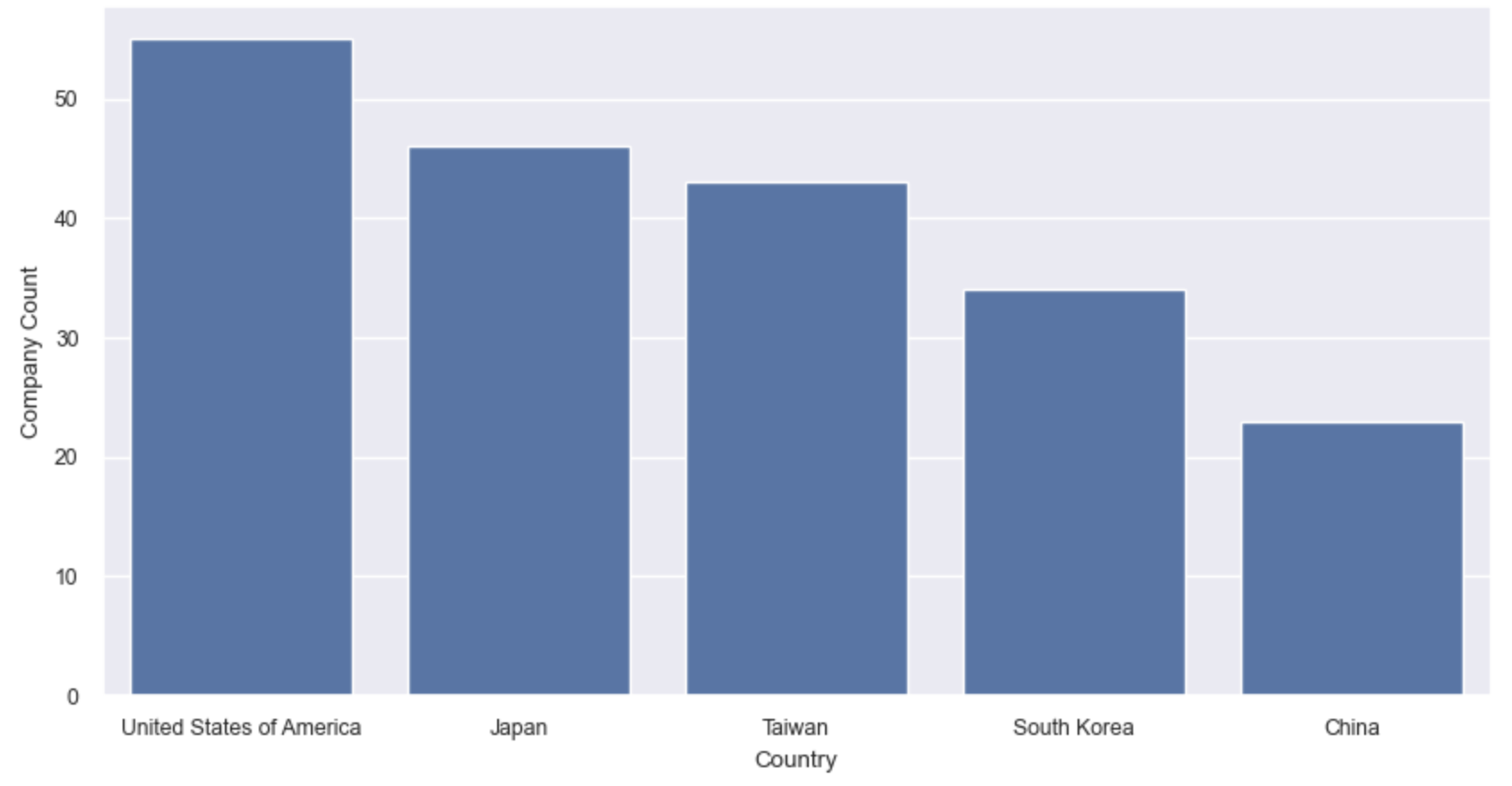
Top 5 Ranked Countries
China, Japan, Taiwan, and South Korea are full of these Kingboard type companies. They are essential suppliers to the Cybertron build out, which is why month after month they are the top ranked countries in the world.
It has massive ramifications for asset allocation.
It’s also why we are pivoting our asset allocation and attention more to Asia.
Below are links to:
the YWR Factor Model Dashboard which combines the rankings with the estimate charts.
the YWR Factor Model Rankings Sheet in Google Sheets format so you can download it.
the top inflection stocks by country and industry.
