

We’re in the early stages of the crash.
Not of the stock market.
But of humanity.
And I’m not sure what there is to do about it.
Except, maybe buy Google.
That’s my takeaway from the Google I/O developer keynote.
We will start with the product takeaways, then get to the bigger picture.
I/O Takeaways
Here is what struck me over 2 hours of product launches.
Google has the full stack.
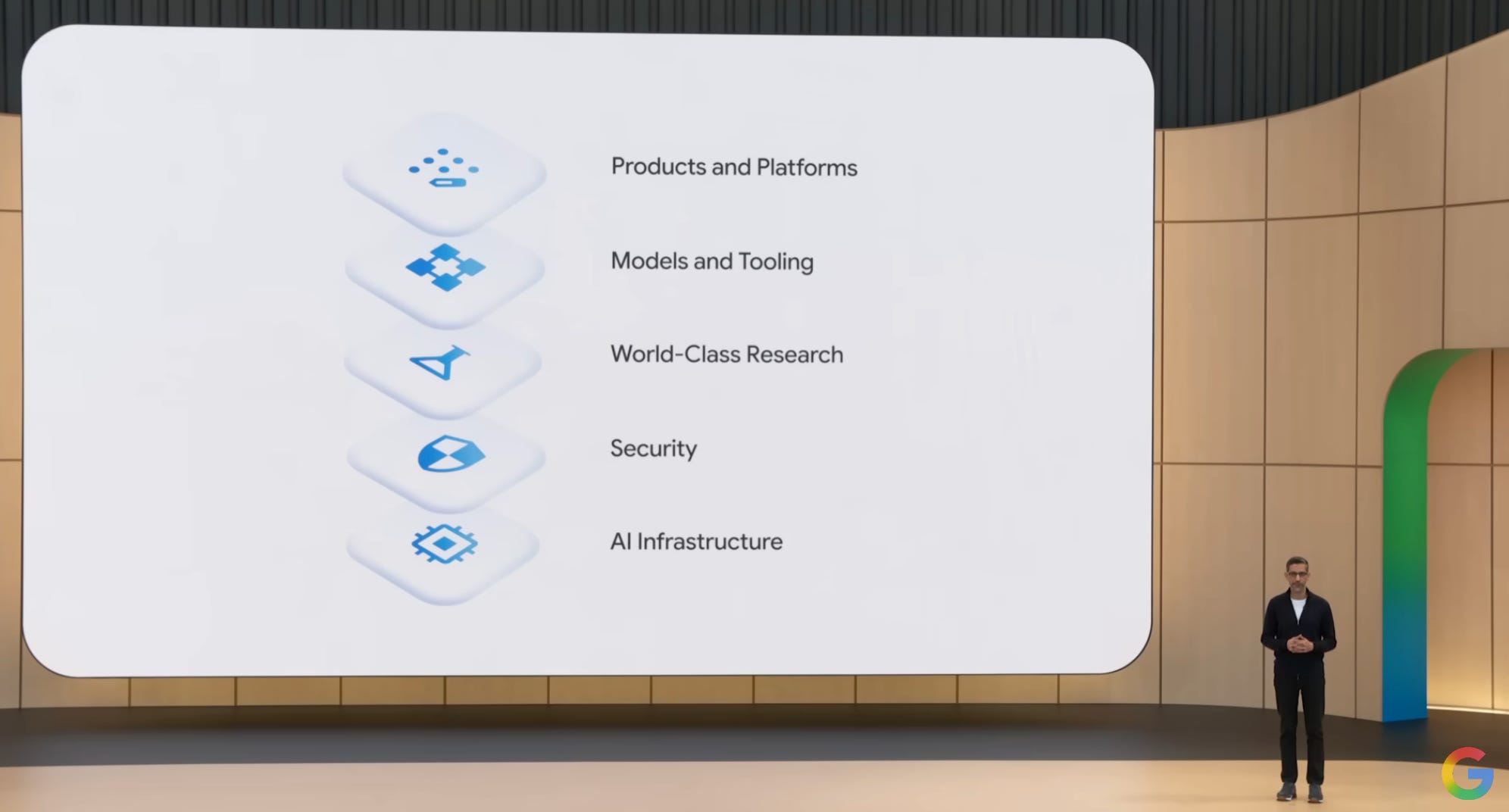
Google is a unique business model. They have the chips, cloud services, their own frontier model and the consumer apps.
People always say ‘AI is great, but how do you make money from it?” Google is going to make a lot of money from it because the key is they own the apps and have the flexibility to change where they monetise across the business. They can shift away from the advertising model which took them this far.
Kill your babies.
Isn’t that what they say in the film editing?
Ask YouTube: With this new feature you can ask YouTube how to do something, like “teach my kid how to ride a pedal bike” and it pulls up the top videos and goes straight to the relevant section in the video relating to your question (ie, minute 3:15).
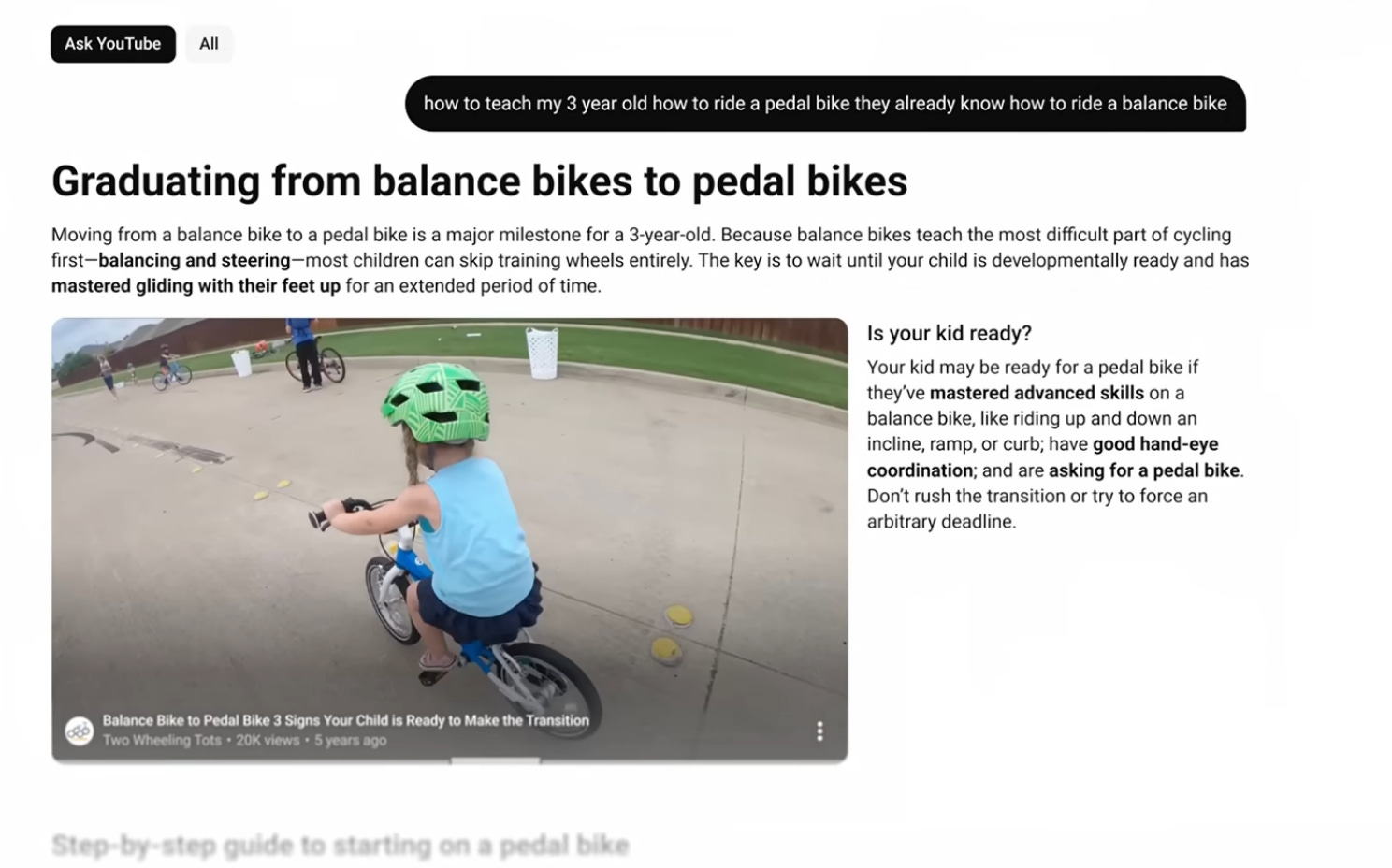
Cool feature. But notice how taking the user exactly to minute 3 could unbundle the creator’s brand building and product placement at the beginning of the video. For the user it’s great. It cuts out all the fluff. For the creator it is a challenge.
Like with AI search Google is kind of eating the content creators. It makes it harder for them to monetise in the traditional way through advertisements. The whole business of internet advertising, what it means to advertise and who you are advertising too is changing. We need to think how to advertise to AI agents. More on that later.
Live Docs: This is where you brainstorm into a microphone and Google creates your Word document for you. For example, you can brainstorm the speech you are supposed to give at your High School Career Day next week. More on that later too.
Gemini Omni: Demis Hassabis came on stage to present Google’s new world model, Omni. Omni helps AI understand real world physics. It makes AI much more realistic in recreating real world images. More on that later.
AntiGravity: This is Google’s Agentic coding software. In the demo a programmer creates an entirely new computer operating system for $1,000 in tokens.
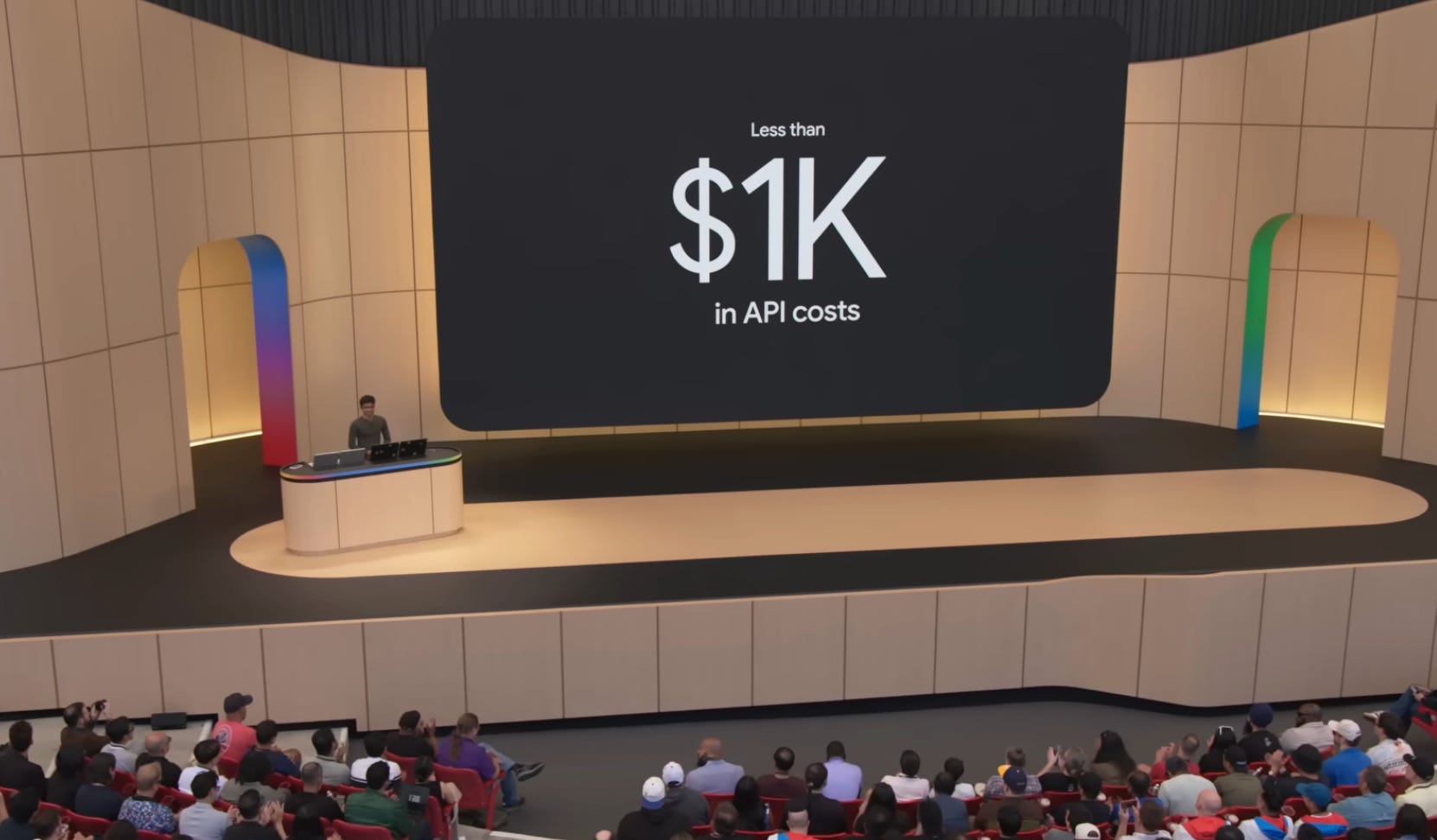
Guys… an entire computer operating system using natural language prompts for $1,000 in tokens. He then also creates his own version of the game Doom.
The new reality is that with software and websites anyone can build anything. For software the remaining moat might be in credibility and trust.
All in on AI Search: We know the uncertainty about AI search and what it means for paid search, but in case you are wondering Google is ploughing full steam ahead on this. Because it fits with everything else they are building.
There is a bigger checkmate move underway.
Gemini Spark: This is Google’s version of Meta Muse or Grok Bot. Your always on personal AI assistant. The battle for your AI chief of staff is massive and Google is in a strong position. They have your gmail, calendar, maps, the Workspace suite and your search history. Yes, the other bots can integrate those apps too, but Google is naturally in the flow.
They want Spark to proactively organise your life for you.
Spark is the Trojan horse which unlocks where Google is going with search and the new way they intend to get paid.
Agentic shopping.
Agentic Shopping Protocols
Google is developing protocols for how agents will shop and make payments. They call this the Universal Commerce Protocol (UCP).
UCP is the communication standard so buying and selling agents can communicate. It also includes guardrails to prevent your agents spending money on things you don’t approve.
And superimportantly… your data stays private (only for Google).
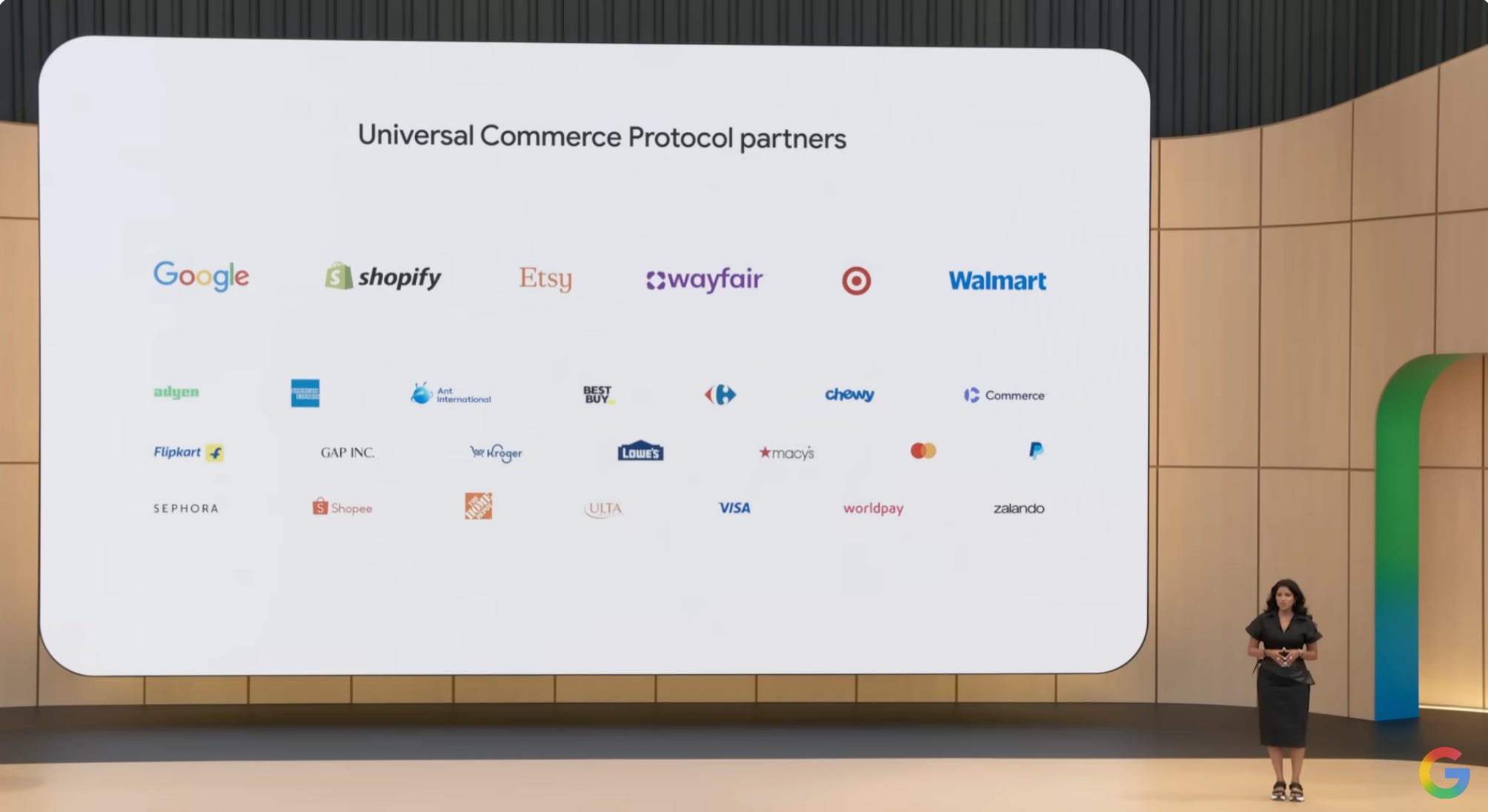
Of course all these agent payment protocols already exist for blockchains, but Google is developing their own centralised, corporatey version of the same thing, with themselves and their apps in the middle of it.
Universal Cart: Here everything comes to its natural conclusion. The Google Universal Shopping Cart. As you search around the web with Google AI search you can simply click on any product image and add it to your cart. Meanwhile, the Gemini AI model will see what you are searching, what you are buying, reason about what you are trying to do, then start making suggestions of other things you should buy for your project or trip.
This is where it was always going to go.
The AI agent doing the shopping for you. Baidu has been talking about this for two years but been unable to monetise it so far. I expect Google is going to be successful at this because they are brining in the personal assistant too.
Spark + Universal Cart: There was a hokey example (all the examples were hokey) where Spark notices in your calendar that Wednesday is ‘snack day’ where you are supposed to bring snacks to school for your kid’s class.
Oh goodness. I’m so busy. What do I do?
Don’t worry. Spark will handle it for you! Spark will use your card (in Google wallet) + Universal cart to buy all the snacks and remember to make sure none of them have nuts.
FFS.
Behind the scenes of this stupid example is the real war.
If you are in the food business how do you get Spark to choose your brand of snack?
How do you advertise to AI agents?
It’s why we created the YWR MCP.
You might love YWR, but we need your agent to love YWR too.
Intelligent Eyewear
Like Meta, Google is doing AI glasses too. I hate these things, but I see why companies can’t resist the product. Nobody company wants to miss the next potential iPhone.
And people will probably buy them.

Isomorphic Labs
Demis Hassabis and Google will use AI to cure cancer, so you can ask Spark to buy your cancer medicine too.
Check Mate
Google has all the pieces and this freak out about paid search revenues is like worrying about the collapse of buggy whips. Why should Google care about making pennies on ‘paid search’… they are going to make several % on everything you do in your life from buying school snacks to going on vacation. And there will still be advertising, but the game will change.
Subtly now, but increasingly going forward, advertising will be about how to win the loyalty of agents. Because more and more you will only vaguely be in the loop at the initial planning stage.
‘Spark..book us a trip to Puerto Rico. Plan a fun itinerary, and make sure there is time for surf lessons.”
From there the AI agent handles the ‘details’ for you.
Now can I say why this is terrible and how we make money from it?
