

Should have done strip clubs and steak dinners.
That’s what I thought as I was driving all alone down 280 to Paolo Alto.
I was an equity salesperson at HSBC in San Francisco. Part of my job was to come up with some client entertainment for the PM’s I covered. Client entertainment was a big deal to our head of equities back in NYC. He was an old school Irish American. His view was entertainment was where the business was won, not bringing in boring analysts nobody cared about. Business was won in the strip club, the golf course or a boozy steak dinner. When he would come out to SF he would tell us stories about the good old days of spending thousands of $’s on dinners and strippers and then the big trades which would flow in the next morning as they were hungover at their desks.
So his view was if he didn’t see 000’s of $’s on our HSBC corporate cards that was a bad thing. It meant the client was out partying with our competition, instead of us.
Except this wasn’t NYC. I was in SF. My clients were mega long-only fund managers who left the office at 3pm to get over the bridge and back to Tiburon so they could train for triathlons. And they had more money than god. They didn’t need steak dinners with an HSBC salesperson.
So how do I hook a cerebral triathlete into some client entertainment with a broker they don’t care about?
My brilliant idea was to subscribe to a series of economic lectures and guest speakers at Stanford University. The way I envisioned it the top PM’s at Capital and I would go down to Stanford together, talk ideas in the car for 1 hour, hear a great insightful talk, have dinner afterwards, and become best friends.
You can imagine how that worked out.
So here I was driving down to Stanford, by myself, to hear a lecture from a nobody professor (Enrico Moretti) about ‘The New Geography of Jobs’. I had debated for a long time why I too was bothering to drive down to Stanford, but figured it would look worse if HSBC found out I wasn’t going to the talks either.
Turns out it was the best economics lecture ever. And I think about it all the time.
Like today.
You see Moretti’s insight was that wealth creation in the modern day plays out at the city level, not the country level. He analysed job data across the US and discovered job creation is highly concentrated in several key innovation nodes (Silicon Valley, Seattle, Washington DC/Virginia, Austin, New York). We focus on the total job creation for a country, but really it is job creation in 5 cities, with losses everywhere else. This was back in 2012.
As Enrico studied these innovation hubs, he saw there was a tremendous multiplier effect at work. High paying innovation jobs created an even greater number of high paying service jobs, which raised the incomes for everyone. Then there was also the flywheel effect as tech founders would spin out to create new companies. This high income job growth would also pull in top talent from around the country. Which further strengthened the innovation cluster.
It all seems kind of obvious now, but this was 2012 and at the time nobody had realised just how bifurcated the job market had become. It was winner takes all for the innovation clusters and crumbs for everyone else.
But my favorite part of the talk was his discussion of how innovation clusters form in the first place. In economic policy circles this was a big focus. If innovation hubs create all the jobs, how do you create more innovation hubs?
It turns out there is no clear recipe and it’s partly luck.
He’d done correlation analyses around university rankings, state taxes, education levels, etc and they were all hit or miss. Yes, Silicon Valley had an elite university, but Austin and Seattle did not. Enrico’s conclusion was that there was no set recipe and sometimes they just happen organically. Like the story about Seattle. This was my favorite story from the talk and the one which stuck with me.
Seattle in the 1970’s was dire. Seattle had just experienced the ‘Boeing Bust’ where Boeing had cut its workforce from 100,000 to 40,000. Seattle’s other big industries were the port and timber, which weren’t growing either. Nobody could see how Seattle would ever grow again and people were leaving. It was so bad that two real estate agents put up a sign along the highway asking the last person leaving Seattle to turn off the lights.
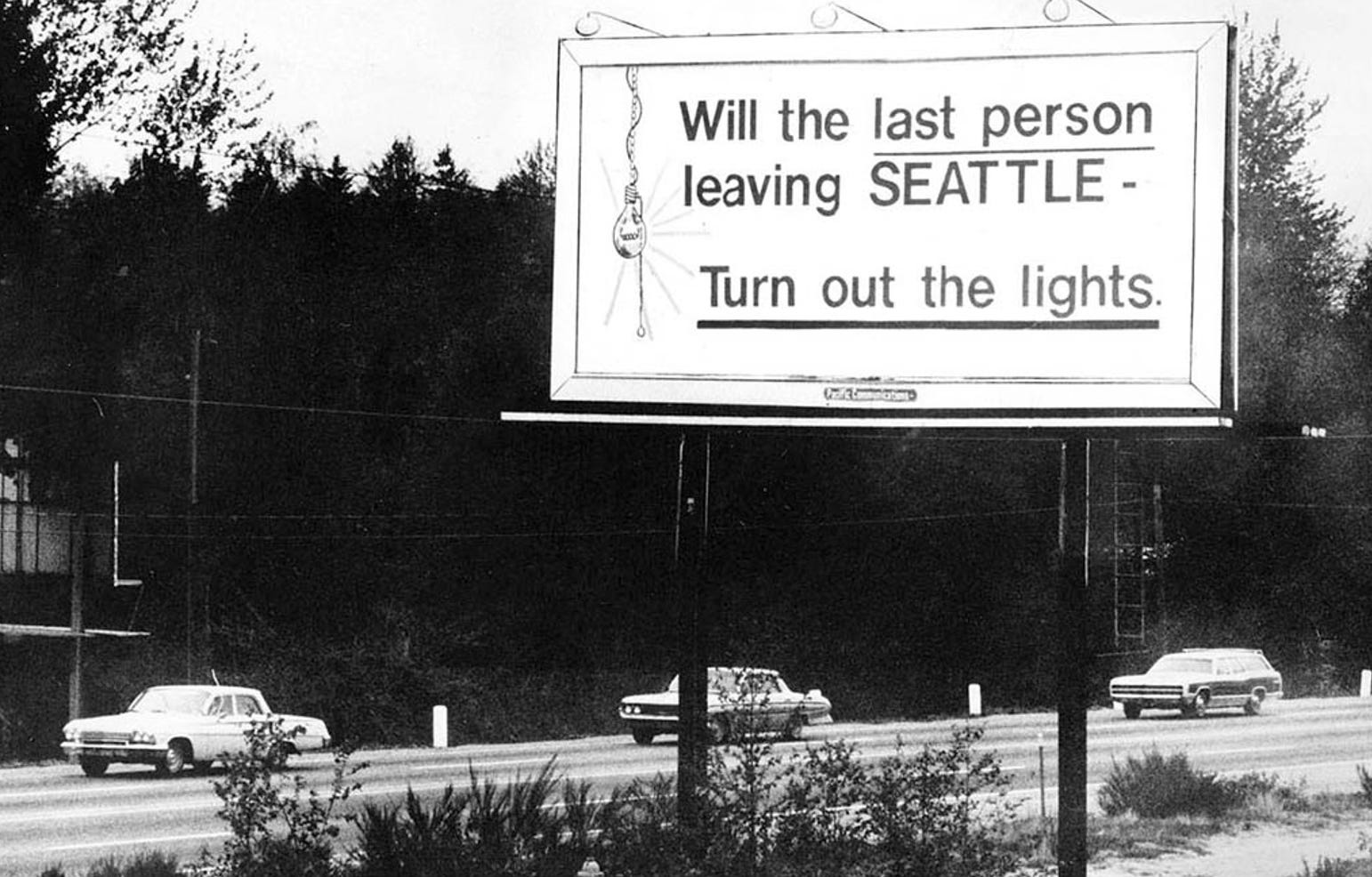
Everything looked terrible. No one could imagine how it would improve. And yet the biggest inflection point ever was already underway. Nobody wrote about it at the time, but two young, homesick computer programmers decided in 1979 to move Microsoft from Albuquerque to Seattle because that was where they had grown up and they missed home.
That was what especially struck me from the talk. The Seattle tech story wasn’t about the tax rates, or the universities, or the mean level of education. It started because Bill Gates wanted to go home. He missed it. And looking back the reason Seattle goes on to become the top 2 tech city in the world comes down to one person. Yes, Bezos came later, but he came because of Gates.
Gates got the flywheel turning.
London’s Bill Gates
And this is what struck me when I was watching The Thinking Game about Demis Hassabis. There is a part in the movie (minute 6:12) where Demis convinces Peter Thiel to back an AI research company which has no product. Thiel agrees to fund Deep Mind, but wants to move the company to Silicon Valley. Demis pushes back. He doesn’t want to be in Silicon Valley .

He wanted to be in London to tap into the top talent at Cambridge and Oxford. And he wanted researchers who would stick with him for the long haul it was going to take to build AGI; not hopping around all over the place for the next stock option package. He didn’t want to be near all the other start ups.
Thiel reluctantly agrees that Deep Mind can be based in London. And that right there was the inflection point. The Bill Gates moment. Demis loves Cambridge and wants to be near it.
Fast forward to 2014 and Deep Mind gets bought by Google and London becomes one of Google’s top hubs for AI research.
It reminded me of the Bill Gates story in Enrico’s talk.
London’s Jeff Bezos
And I was reminded of Enrico’s talk again today.
Like with Bezos packing his car to move to Seattle, in a fortuitous turn of events, another AI titan wants to focus on London.
This is the news today.
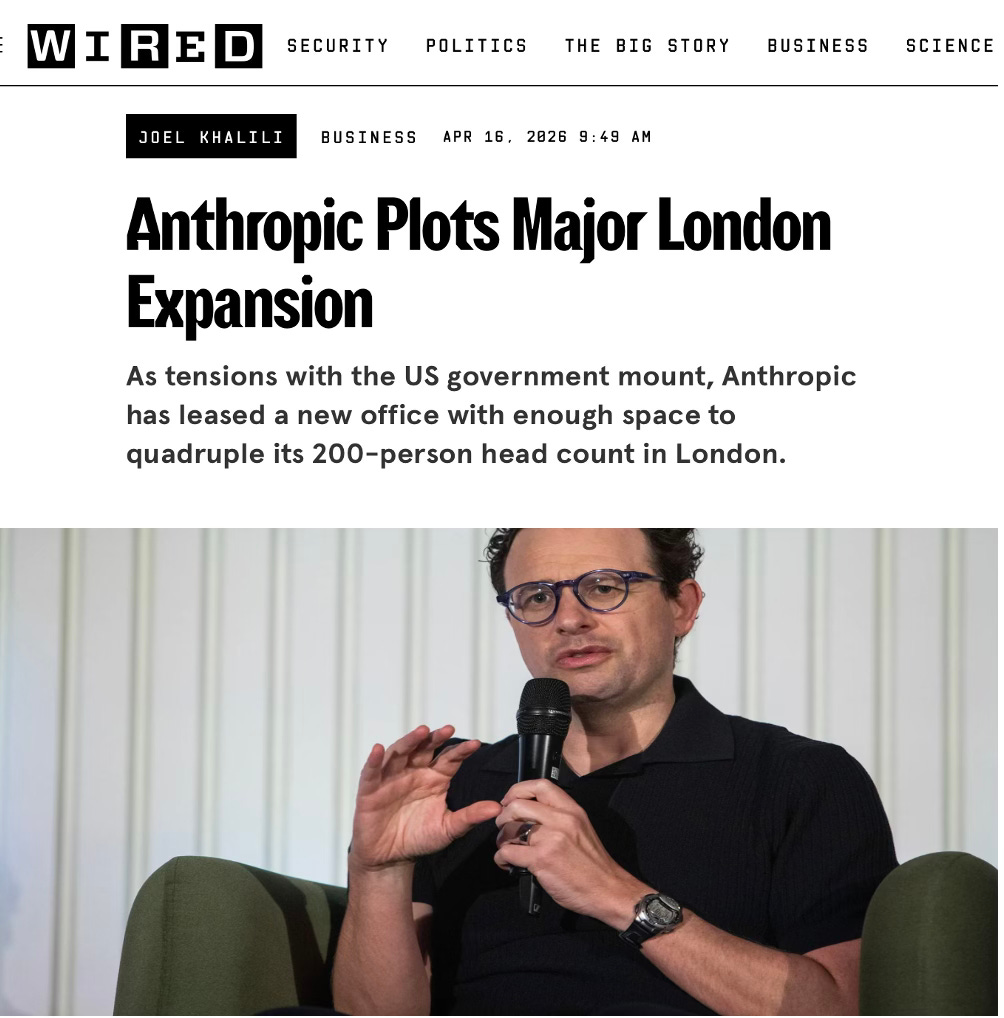
After being designated a supply chain risk by the US Department of War, it seems Dario Amodei sees the strategic benefit of diversifying out of the US security net and building up a strong London hub.
Like Demis, Dario also sees London is a globally unique hub of research talent in one small place (Oxford, Cambridge, Imperial, UCL, Francis Crick Institute, Alan Turing Institute).
Sam sees it too.
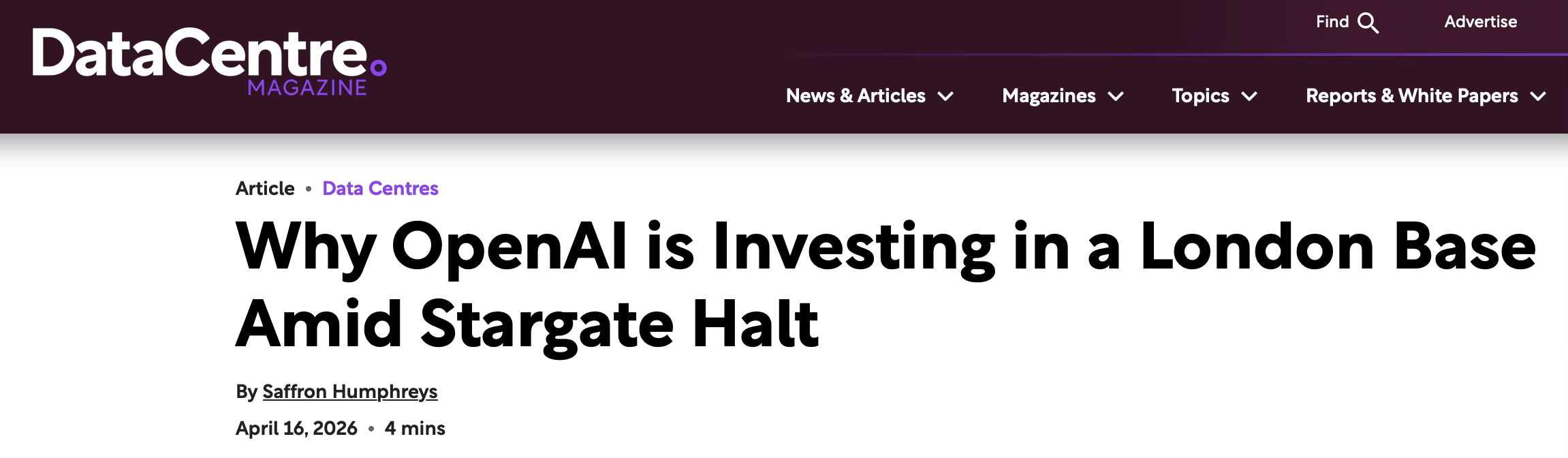
Elon’s xAI is also building out their London office.
It’s happening. London is turning into a global AI hub.
The Seattle of AI.
So how do we make money?
